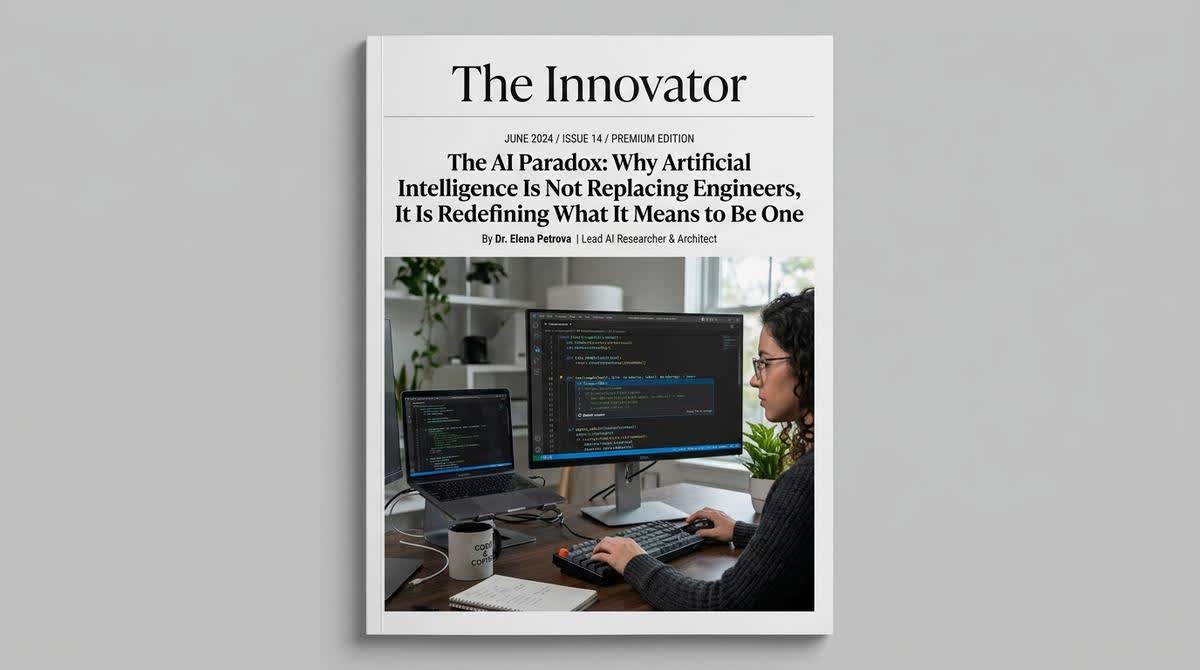
The craft of software development has always been about constant evolution. From assembly language to high-level languages, from procedural to object-oriented programming, and from monolithic to microservices architectures, the tools and techniques have changed dramatically. Now, a new wave of change is upon us, driven by AI-powered development tools. The question is no longer if these tools will be used, but how to integrate them effectively into a professional workflow.
For many developers, especially those who have been in the industry for a decade or more, the idea of AI writing code can feel unsettling. It challenges the very core of what it means to be a developer. However, the reality is that AI is not replacing developers; it is changing what they do. This article explores the practical applications of AI in the development process, the challenges it presents, and a framework for leveraging it effectively.
The AI Toolkit: What the Tools Actually Do
The modern developer has access to a rapidly growing suite of AI-powered tools. Each tool addresses a specific part of the development lifecycle.
Tool Type Function Examples
AI Code Completion Suggests entire lines or blocks of code based on the context of what you are typing. GitHub Copilot, TabNine, Kite
AI Code Generation Generates code from natural language descriptions, effectively turning comments into code. ChatGPT, Claude, AWS CodeWhisperer
AI Debugging & Testing Identifies bugs, suggests fixes, and can even generate and run test cases automatically. Diffblue Cover, DeepCode, Snyk
AI Documentation & Translation Generates documentation from code, translates code from one language to another, or explains complex code. ChatGPT, Claude, Copilot Chat
AI Code Review Automates parts of the code review process, highlighting potential security vulnerabilities, style violations, and performance issues. DeepCode, Codacy
The New Workflow: A Human-AI Partnership
Effectively integrating these tools requires a shift in workflow. It is not about replacing the developer; it is about augmenting their capability and freeing them to focus on higher-level tasks.
The Traditional Developer Workflow:
The traditional workflow is often a cycle of: Ideation (what to build) -> Design (how to build it) -> Coding (writing the code) -> Review (checking the code) -> Testing (verifying the code) -> Debugging (fixing problems) -> Deployment.
The AI-Augmented Developer Workflow:
The AI-augmented workflow integrates AI tools into this cycle to accelerate and enhance each step.
Phase Traditional Task AI-Augmented Task
1. Ideation & Requirements The developer thinks about what to build and the requirements. The developer uses AI to brainstorm potential solutions and generate initial use cases or feature descriptions.
2. Design The developer designs the architecture and API specifications. The developer uses AI to generate design patterns, suggest database schemas, and validate architectural decisions.
3. Coding The developer writes the code line by line. The developer writes the "intent" (through comments or prompts) and the AI generates the code. The developer then reviews, validates, and refines the AI's output.
4. Code Review A human peer reviews the code. The developer uses AI tools to perform an initial review, catching common issues (like security vulnerabilities) before the human review.
5. Testing The developer writes test cases and executes them. The developer uses AI to generate test cases automatically, speeding up the testing process and increasing coverage.
6. Debugging The developer manually searches for the root cause of a bug. The developer uses AI to analyze error logs and point to the most likely cause of the bug, significantly accelerating the fix.
7. Documentation The developer writes documentation from scratch. The developer uses AI to generate initial drafts of documentation, which are then reviewed and refined.
Practical Tips for Using AI in Development
1. Be Specific with Your Prompts: The more specific your prompt, the better the output. Instead of saying "write a function to connect to a database," say "write a Python function that uses the SQLAlchemy library to connect to a PostgreSQL database, handle connection errors, and return the connection object."
2. Think of AI as a Junior Developer: You would not trust a junior developer to write production-ready code without review. The same applies to AI. Always review, test, and validate the AI's output. The responsibility for the final product remains yours.
3. Use AI for Learning, Not Just Production: One of the most powerful uses of AI is to learn new programming languages or frameworks. Ask the AI to explain concepts, show you examples, and help you build small prototype applications.
4. Understand the Limitations: AI is not always right. It can generate incorrect, inefficient, or even insecure code. AI can hallucinate, providing plausible-sounding but completely wrong answers. You must have the expertise to identify these errors.
5. Master the Art of the Prompt: Prompt engineering is a skill. The way you phrase the prompt dramatically affects the quality of the output. Be clear, be specific, and provide context.
نصيØØ© الخبير: استخدم الذكاء الاصطناعي لتوليد "الكود الأولي" (Boilerplate Code) ونماذج الاختبار. هذه المهام المتكررة هي التي تستنز٠وقت المطور وتقلل من إنتاجيته. عندما ÙŠØرر الذكاء الاصطناعي المطور من هذه المهام، يمكنه التركيز على التØديات المعمارية المعقدة التي لا يستطيع الذكاء الاصطناعي Øلها.
The Future: What the Software Developer Role Will Become
The role of the software developer is evolving from "code writer" to "code orchestrator."
The Old Role (Pre-AI) The New Role (AI-Augmented)
Code Writer Code Orchestrator
Spends 70% of time on the "how" (implementation details). Spends 30% of time on the "how" and 70% on the "what" (architecture, requirements) and "why" (business value).
Focuses on syntax and algorithms. Focuses on system design, integration, and the "big picture."
Specializes in a single language or framework. Is language-agnostic and focuses on solving business problems, using AI to handle language specifics.
The primary value is in writing code. The primary value is in defining the problem, guiding the AI, and validating the outcome.
The Final Lesson: The Developer's Role Is More Important Than Ever
AI is not making developers obsolete. It is making them more powerful. It is freeing them from the drudgery of writing repetitive code, allowing them to focus on the higher-value strategic work of designing solutions, solving complex problems, and building systems that create real business value.
At AllandMuchMore, our developers are trained to be "AI Strategists." We understand the power and the limitations of these tools, and we know how to use them to deliver exceptional software, faster and more reliably. We are not just developers; we are developers who are building the future with AI.