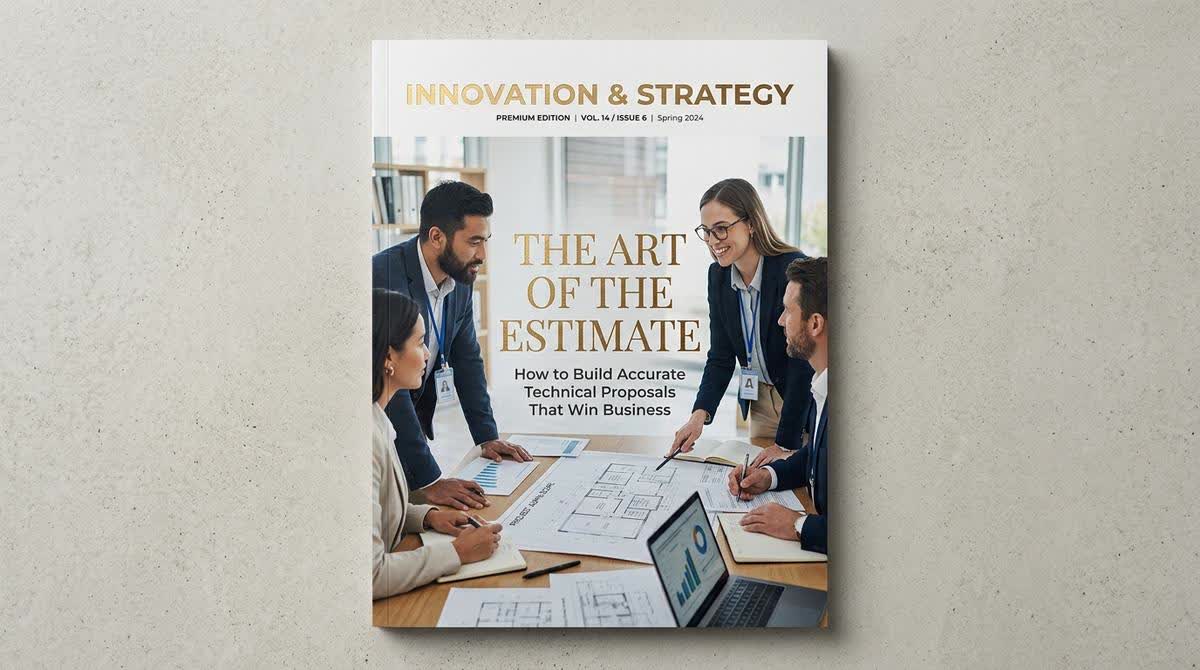
In the world of technical services, the proposal is often the first, and sometimes only, chance to make an impression. It is the document that a potential client uses to judge your expertise, your professionalism, and your value proposition. A weak, inaccurate, or vague proposal can kill a deal before it even starts.
Yet, despite its importance, the art of writing a technical proposal is often overlooked. It is treated as a necessary administrative task, rather than a strategic business tool. This article provides a practical framework for building accurate, compelling proposals that win business.
The Anatomy of a Winning Technical Proposal
A winning proposal is not just a price list; it is a sales document. It is a promise of value. It addresses the client's needs, builds confidence in your company, and differentiates you from the competition.
Section Purpose Key Content
Executive Summary Grab the client's attention and summarize your proposal. A brief, high-level summary of the problem, your solution, and why you are the right choice.
Understanding the Client Show that you have listened and understood their needs. Summarize the client's goals, challenges, and requirements in their own words.
Scope of Work Clearly define exactly what you will deliver. A detailed breakdown of the tasks, deliverables, and responsibilities.
Technical Approach Explain how you will deliver the solution. A detailed description of your methodology, tools, and processes.
Timeline Show that you are organized and can deliver on time. A detailed project schedule with key milestones.
Pricing Clearly communicate your cost. A transparent breakdown of costs, including line items for labor, materials, and expenses.
Company Credentials Build trust and authority. Showcase your experience, qualifications, relevant projects, and team expertise.
Terms and Conditions Protect your company and define the legal framework. Standard legal terms, payment terms, and liability limits.
The Estimation Process: From Question to Quote
The accuracy of your proposal depends entirely on the quality of your estimation process. A rushed, poorly researched estimate leads to a "winner's curse" – you win the project, but you lose money on it.
Step 1: Understand the Customer's "Why"
The best proposals are not generic. They are tailored to the client's specific needs. Before you write a single word, you must understand why they are buying. What is their pain point? What is their ultimate objective? What is their budget?
Step 2: Define the Scope of Work with Precision
Scope creep is the enemy of profitability. A vague scope of work is a promise to do more work than you have budgeted for.
Element How to Define It
Hardware & Materials Be specific. List every component, model number, and quantity. Do not assume the client will know what you mean by "network cable."
Labor Estimate the number of hours for each task. Break down the labor into specific phases of the project.
Deliverables Clearly state what you will deliver at the end of each phase.
Exclusions Equally important as inclusions. Clearly state what is NOT included in the price. "Cable supply is not included." "Provision of network switches is not included."
Assumptions List your assumptions. "Assumes standard working hours." "Assumes access to the site is available."
Step 3: Price with Transparency
A transparent proposal builds trust and minimizes objections. Break down your costs so the client can see exactly what they are paying for.
Cost Category What to Include How to Present It
Direct Costs Materials, hardware, and subcontractor costs. List these as a separate line item with the cost.
Labor Costs The cost of your team's time. Show the estimated hours and the hourly rate.
Overhead A reasonable markup to cover your business costs. Show it as a percentage of the total.
Profit Margin Your company's profit. Show it as a percentage of the total.
Step 4: The "Rule of Thumb"
When in doubt, use a conservative estimate. It is better to provide a slightly higher price and deliver on time and on budget than to provide a lower price and lose money. There is a simple rule of thumb:
Scenario Recommendation
"I think this will take about 100 hours." Estimate 130 hours. This accounts for the unexpected.
"I think the parts will cost about $5,000." Estimate $6,000. This accounts for price fluctuations and overruns.
"I think it will take 3 weeks." Estimate 4 weeks. This accounts for delays and client feedback.
Common Mistakes and How to Avoid Them
Mistake Why It's a Problem How to Fix It
Relying on a Single Estimate Overly optimistic or pessimistic. Get multiple inputs. Ask a senior engineer to review your estimate.
Providing a "Blind" Price Lacks transparency. The client may be suspicious of your cost. Break down the price. Show the components of the cost.
Being Too Vague Scope creep. Leaves the door open for the client to ask for more work. Be specific. Use clear language. State what is and is not included.
Ignoring the Client's Timeline Lacks understanding of their urgency. Address the timeline in the proposal. Show that you understand the urgency.
Not Including an "Assumptions" Section Ambiguity. The client may assume you have included things you have not. Always include an "Assumptions" section. State your assumptions clearly.
Writing a Generic, Copy-Paste Proposal Shows a lack of effort. The client will not feel valued. Tailor the proposal to the specific client and project. Use their name. Reference their specific challenges.
The AllandMuchMore Approach
At AllandMuchMore, we treat the proposal as a strategic document. We invest time in understanding the client's needs, defining the scope with precision, and building a transparent price. Our proposals are not just quotes; they are a promise of value and a reflection of our professionalism.
The Final Lesson: The Proposal Is a Promise
A proposal is more than a document; it is a promise to deliver. The accuracy of that promise builds trust, and trust is the foundation of a successful business relationship. Build the right proposal, and you will win the right clients.