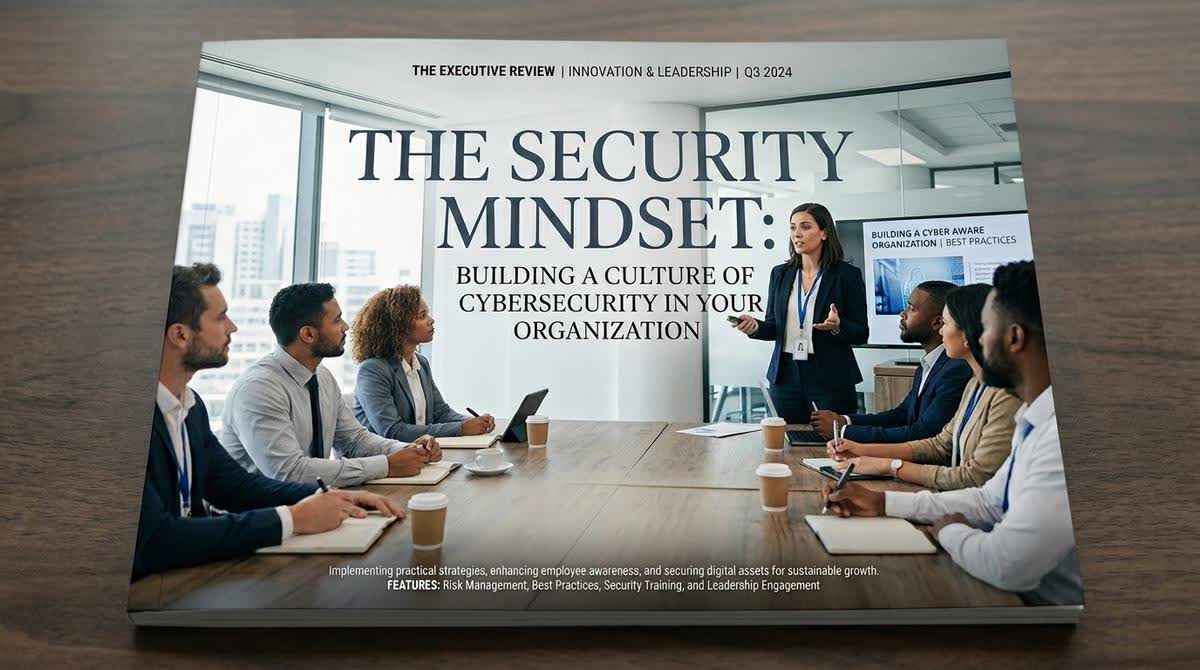
The most sophisticated security software in the world is useless if your employees are clicking on phishing links or using "password123" as their password. Cybersecurity is not just a technology problem; it is a human problem. It is a cultural problem. It is a leadership problem.
The reality is that the biggest vulnerability in any organization is its people. And the most effective defense against cyber threats is a culture that prioritizes security at every level. This article explores how to build that culture, from the CEO to the newest hire.
The Human Factor: Why People Are the Weakest Link
Understanding why people are the weakest link is the first step to building a stronger defense.
Human Vulnerability Description Example
Lack of Awareness People simply do not know the risks. An employee clicks on a link in a phishing email.
Convenience Over Security People choose the easy path. An employee uses the same password for all their accounts.
Trust People are naturally trusting. An employee gives sensitive information to a person who claims to be from IT.
Bias and Manipulation People are susceptible to social engineering. A hacker manipulates an employee into giving them access to the network.
Complacency People become comfortable and let their guard down. An employee ignores security training because they think it will not happen to them.
Building a Security Culture: A Framework
Building a security culture is a long-term, ongoing commitment. It requires leadership, training, reinforcement, and a focus on behavior change.
1. Leadership Commitment
Security must be a priority from the top. Leaders must set the tone by demonstrating that security is important.
The CEO Must Own It: The CEO must be the "Chief Security Officer." They must talk about security, budget for it, and make it a part of the company's strategic vision.
Lead by Example: Leaders must follow the same security protocols as everyone else. If a leader uses a weak password, it sends the wrong message.
Allocate Resources: Security is not a cost center; it is an investment. Leaders must budget for training, tools, and personnel.
2. Employee Education and Awareness
Regular training and awareness programs are the foundation of a security culture.
Tactic How to Implement
Regular Security Training Conduct mandatory training sessions for all employees, at least annually, and more frequently for high-risk roles.
Phishing Simulations Send simulated phishing emails to employees to test their awareness. This is one of the most effective ways to train people to spot threats.
Micro-Learning Use short, engaging videos and quizzes to reinforce key security concepts.
Security Champions Identify and empower employees who are passionate about security. They can serve as ambassadors and advocates for security initiatives.
3. Clear Policies and Procedures
A security culture needs clear rules of the road. These policies are the roadmap for behavior.
Policy Key Elements
Password Policy Enforce strong passwords (minimum length, complexity). Require multi-factor authentication (MFA) for all critical systems.
Acceptable Use Policy Define what is and is not acceptable behavior on company systems (e.g., personal social media use, downloading unauthorized software).
Data Handling Policy Define how sensitive data should be handled, stored, and shared.
Incident Response Plan Define the steps to take in the event of a security incident.
4. Open Communication
Employees should feel comfortable reporting security concerns without fear of reprisal.
Create a Safe Reporting Channel: Provide a confidential channel for employees to report concerns or incidents.
No Blame Culture: Encourage reporting by adopting a "no-blame" culture for mistakes. If an employee accidentally clicks a link, they should be encouraged to report it immediately. This is far more effective than punishing them, which will only discourage reporting.
5. Continuous Reinforcement
Security is not a one-time event; it is a continuous process of learning and reinforcement.
Tactic How to Implement
Regular Reminders Send periodic security reminders via email or internal messaging.
Celebrate Success Recognize and reward employees who demonstrate good security behaviors.
Keep Training Current The threat landscape is constantly evolving. Security training must be updated regularly.
Conduct Regular Audits Regularly audit your security controls and practices to identify weaknesses.
The AllandMuchMore Approach
At AllandMuchMore, security is not just an IT responsibility; it is a cultural value. We build security into every aspect of our business. Our leadership team champions security, our employees receive regular training, and our security policies are clear and enforced. We know that our clients trust us with their data, and we take that responsibility seriously. This is not just a policy; it is the foundation of our business.
The Final Lesson: Trust Is Earned, Not Given
In the modern business landscape, trust is the most valuable currency. And trust is built on a foundation of security. Clients trust us with their data because they know we take security seriously. Employees trust us with their careers because they know we are a responsible organization. This trust is our competitive advantage, and it starts with a strong security culture.