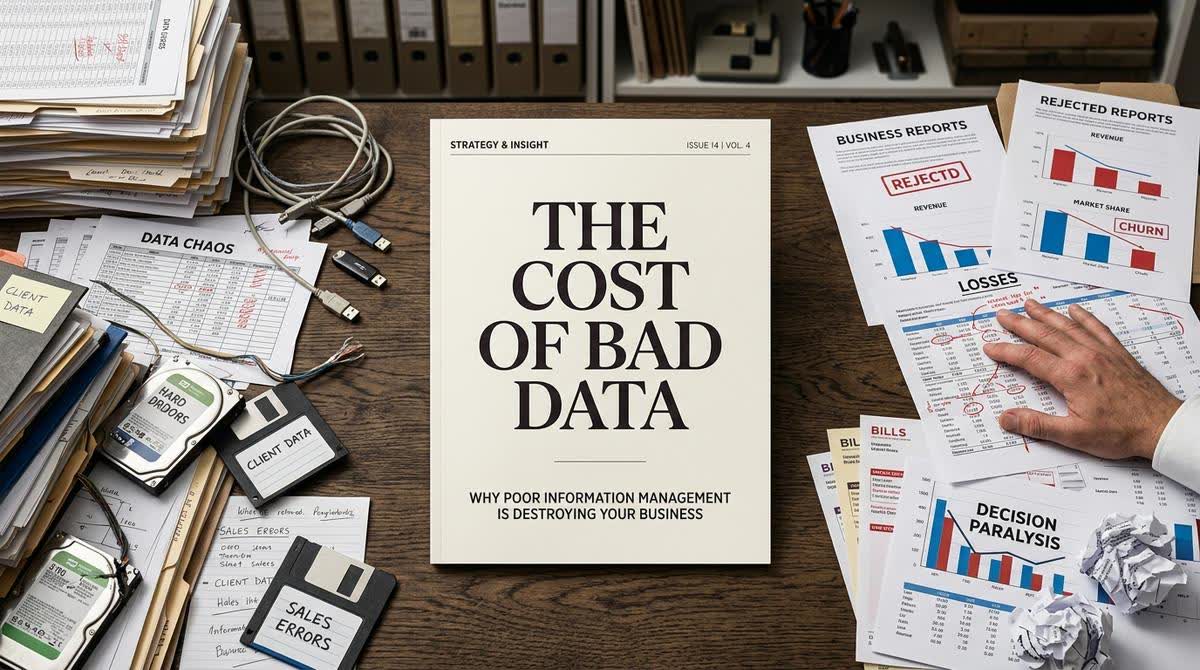
Data is often referred to as the "new oil," a valuable resource that, when refined, can power entire economies. But this metaphor is incomplete. Data is also like water; it can nourish your business, or it can flood and drown it. The quality of your data determines which outcome you experience.
The truth is, many organizations are drowning in bad data. They make decisions based on inaccurate reports, spend money on marketing to the wrong people, and lose customers because they cannot see the patterns in their own business. The cost of this bad data is not just a line item; it is a systemic drag on performance that can destroy a business over time. This article explores the hidden costs of bad data and provides a framework for building a data quality culture.
The Anatomy of Bad Data
Bad data is not just a minor inconvenience; it is a structural problem that affects every part of the organization. It takes many forms.
Form of Bad Data Description Example
Inaccurate Data Data that is wrong or incorrect. A customer's phone number is entered incorrectly.
Incomplete Data Data that is missing critical fields. A sales lead's email address is missing.
Duplicate Data The same information exists in multiple places. The same customer is entered twice in the CRM.
Inconsistent Data Data that is formatted or represented differently across systems. One system stores dates as MM/DD/YYYY and another as DD/MM/YYYY.
Outdated Data Data that is no longer relevant or accurate. A contact has changed jobs, but the CRM still has their old company information.
The Hidden Costs: What Bad Data Is Actually Costing You
The cost of bad data is not just the time it takes to fix it. It is far more insidious, affecting revenue, efficiency, and customer trust.
Cost Category Description Real-World Impact
Lost Revenue Bad data leads to missed sales opportunities. You spend money marketing to the wrong people. Your sales team is chasing dead leads. Your upsell efforts fail because you do not understand your customers' needs.
Wasted Marketing Spend Marketing campaigns are only as good as the data they are based on. You send promotional emails to addresses that do not exist (bounce rates). You target the wrong audience with irrelevant messages (low conversion).
Inefficient Operations Employees spend time searching for the right information or fixing errors. Your support team wastes time tracking down customer information. Your sales team has to manually correct data before making a call.
Poor Decision Making Decisions are only as good as the data they are based on. You launch a new product based on inaccurate market data. You invest in the wrong technology because you cannot see the full picture of your operations.
Damaged Reputation Bad data leads to poor customer experiences. You send the wrong offer to a customer. You cannot answer a customer's question because you do not have their history. Trust is destroyed.
High Customer Churn You lose customers because you cannot serve them effectively. Bad data leads to poor service, irrelevant marketing, and a general sense that you do not understand your customers.
نصيØØ© الخبير: أغلى بياناتك هي بيانات عملائك. خطأ واØد ÙÙŠ رقم هات٠عميل Ù…Øتمل قد يكلÙÙƒ صÙقة بملايين الدولارات. ÙˆØتى لو كانت الصÙقة صغيرة، Ùإن تجربة العميل السيئة بسبب بيانات خاطئة قد تÙقدك العميل إلى الأبد. لهذا السبب، إدارة جودة البيانات ليست رÙاهية، بل هي ضرورة استراتيجية.
The Root Causes of Bad Data
Bad data is rarely a technical problem; it is a cultural and process problem. It originates from a lack of clear standards, insufficient training, and a culture that does not value data quality.
Root Cause Description
Lack of Clear Standards There are no defined rules for how data should be collected, formatted, or entered.
Insufficient Training Employees are not trained on how to handle data correctly.
No Accountability There is no clear owner for data quality, and no one is held responsible for bad data.
Siloed Systems Data is trapped in separate systems that do not communicate with each other.
Short-Term Focus The organization prioritizes speed over accuracy, leading to data entry shortcuts that cause long-term problems.
Building a Data Quality Culture
Fixing bad data is not a one-time project; it is a continuous cultural shift. It requires leadership commitment, clear processes, and the right tools.
1. Leadership Commitment
Data quality must start at the top. Leaders must demonstrate that they value good data and that they expect their teams to take it seriously. This includes allocating resources to data quality initiatives and holding people accountable.
2. Data Governance
Establish a clear framework for managing data. This includes defining who is responsible for data quality (data stewards), what the standards are, and how data will be monitored and improved.
Governance Element Description
Data Standards Define a common language. How will customer names be formatted? What are the required fields for a sales lead?
Data Ownership Assign a clear owner for each type of data. This person is responsible for its quality.
Data Audits Regularly review your data to identify quality issues.
Data Cleaning Implement a process for cleaning and correcting bad data on a regular basis.
3. Employee Training
Employees at all levels need to understand the importance of data quality and their role in maintaining it. They need to know how to enter data correctly and why it matters.
4. Process Design
Design processes that support data quality. Do not create processes that encourage shortcuts. For example, if you require a phone number, make it a mandatory field in your CRM. If you expect a specific format, use input validation to enforce it.
5. The Right Tools
Use technology to support your data quality efforts. This includes:
Tool Type Purpose
Data Validation Tools that validate data as it is entered, preventing errors at the source.
Data Deduplication Tools that identify and merge duplicate records.
Data Enrichment Tools that can automatically fill in missing data fields from external sources.
Data Monitoring Tools that scan your data for quality issues and alert you to problems.
The AllandMuchMore Approach
At AllandMuchMore, we understand that data is a strategic asset. We have implemented a data quality culture that starts with leadership and extends through every part of our organization. We invest in the right tools and training to ensure that our data is accurate, complete, and actionable. This allows us to make better decisions for our clients and deliver superior results.
The Final Lesson: Clean Data Is a Competitive Advantage
In a world of "big data," the organizations that thrive are not necessarily the ones with the most data, but the ones with the best data. Clean data is a competitive advantage. It allows you to understand your customers, optimize your operations, and make better decisions faster. Investing in data quality is an investment in the future of your business. At AllandMuchMore, we are committed to being a leader in data quality, because we know that great decisions are built on great data.