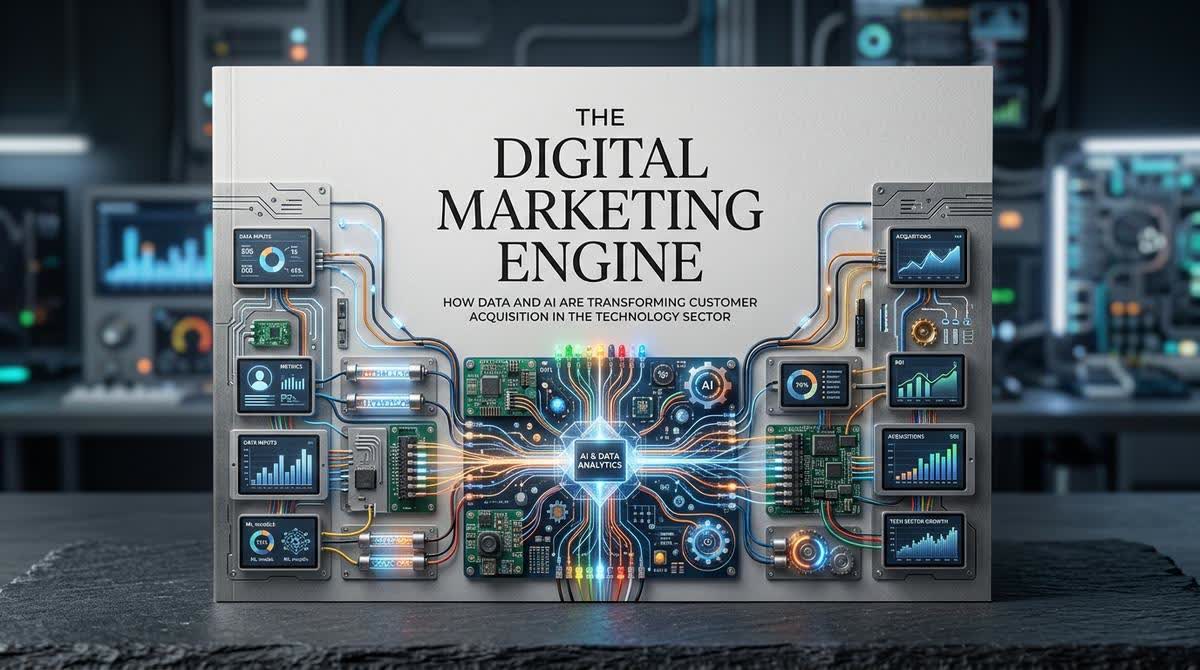
Marketing in the technology sector has undergone a complete transformation in the last decade. The days of relying on intuition, guesswork, and broad-reach advertising are over. Today's successful technology companies use data as their compass and AI as their engine. They understand exactly who their customers are, what they need, and how to reach them at the right time and place.
This article explores how modern digital marketing, driven by data, analytics, and AI, is reshaping how technology companies acquire and retain customers. It provides a framework for building a digital marketing engine that delivers measurable results.
The Shift from Art to Science
Traditional marketing was often seen as an art form, driven by creativity and intuition. Modern digital marketing is as much a science as an art. It is built on a foundation of data, measurement, and continuous optimization.
Traditional Marketing Modern Digital Marketing
Based on intuition and guesswork. Based on data and analytics.
Reaches a broad audience. Targets a specific, high-value audience.
Measures results over months. Measures results in real-time.
Is a cost center. Is a revenue generator.
Focuses on the "message." Focuses on the "customer journey."
The Core Components of a Modern Digital Marketing Engine
A successful digital marketing strategy is built on several core components that work together to attract, engage, and convert customers.
1. The Data Foundation: Customer Intelligence
You cannot market effectively if you do not understand your customer. This means moving beyond basic demographics to understand their needs, pain points, and decision-making process.
Buyer Personas: Build detailed profiles of your ideal customers. What are their job titles? What problems do they face? How do they research solutions?
Customer Journey Mapping: Map out the path a customer takes from becoming aware of your company to becoming a paying client. Where do they find information? What are their decision criteria?
Data Sources: Use data from your website, social media, CRM, and sales team to build a complete picture of your customer.
2. The AI Engine: Personalization and Automation
AI is the engine that makes modern marketing powerful. It analyzes vast amounts of data to deliver the right message to the right person at the right time.
AI Application in Marketing Description
Predictive Analytics AI analyzes historical data to predict future customer behavior, such as which leads are most likely to convert.
Personalization AI personalizes website content, email campaigns, and ad targeting for each individual user.
Chatbots AI-powered chatbots provide instant support and can qualify leads 24/7.
Lead Scoring AI scores leads based on their engagement and likelihood to convert, helping the sales team prioritize their efforts.
Content Generation AI can assist in generating initial drafts of marketing copy and blog posts, freeing up the marketing team for strategy.
3. The Channel Mix: Reaching the Right Audience
The modern customer interacts with brands across multiple channels. A successful strategy requires a deliberate presence on the right channels.
Channel Use Case Best For
Search Engine Optimization (SEO) Driving organic traffic to your website. Long-term, sustainable growth and attracting customers at the awareness stage.
Search Engine Marketing (SEM) / PPC Driving targeted traffic through paid search ads. Capturing demand when a customer is actively searching for a solution.
Social Media Marketing Building brand awareness and engaging with your audience. Building a community and reaching customers at the awareness and consideration stages.
Email Marketing Nurturing leads and engaging with existing customers. Building relationships, providing value, and driving conversions at the decision stage.
Content Marketing Creating valuable, informative content to attract and engage customers. Establishing authority, building trust, and attracting the right audience.
4. The Measurement Framework: Proving ROI
You cannot improve what you do not measure. A robust measurement framework is essential to understand what is working and what is not.
Key Performance Indicator (KPI) What It Measures
Website Traffic The number of visitors to your website.
Cost per Lead (CPL) How much it costs to acquire a new lead.
Conversion Rate The percentage of visitors who take a desired action (e.g., filling out a form).
Customer Acquisition Cost (CAC) The total cost of acquiring a new customer.
Customer Lifetime Value (LTV) The total revenue a customer generates over their relationship with you.
Return on Investment (ROI) The return on the money you invest in marketing.
نصيØØ© الخبير: ÙÙŠ قطاع B2B التقني، أثبتت استراتيجية "تسويق المØتوى" (Content Marketing) Ùعاليتها أكثر من أي قناة أخرى. العملاء ÙÙŠ هذا القطاع يبØثون عن الخبراء، وليس عن المعلنين. عندما تنشر مقالات تقنية عميقة ÙˆØلولاً لمشاكل Øقيقية، Ùإنك تبني الثقة وتجذب العملاء الذين يبØثون عن شريك موثوق، وليس مجرد مورد.
The Integration: Connecting the Dots
The real power comes from integrating these components. Data from your marketing channels flows into your CRM. AI analyzes this data to personalize experiences. Analytics track the results, which are then used to optimize every part of the system.
Your Website: Is the hub. It should be optimized for both search engines and user experience. It should be fast, mobile-friendly, and designed to convert visitors into leads.
Your Blog: Is your engine for attracting traffic. It provides valuable content that establishes your authority and drives organic traffic.
Social Media: Is your amplifier. It distributes your content, builds community, and engages with your audience.
Email Marketing: Is your nurturer. It builds relationships with leads and guides them through the sales funnel.
Analytics: Is your compass. It tells you what is working and what needs improvement.
The AllandMuchMore Approach
At AllandMuchMore, our digital marketing strategy is built on this integrated, data-driven model. We do not guess; we test, measure, and optimize continuously.
We Understand the B2B Journey: The technology sales cycle is long and involves multiple decision-makers. Our content is designed to build trust and authority over time.
We Are Data-Driven: We track everything from website traffic to lead quality to customer lifetime value. Our decisions are based on data, not intuition.
We Use AI Strategically: We use AI tools to analyze data, personalize content, and optimize our campaigns. This allows us to deliver superior results for our clients.
We Are Integrated: Our marketing is integrated with our sales process, ensuring a seamless experience from lead to client.
The Final Lesson: The Expert as the Marketing Asset
In the technology sector, the most powerful marketing asset is not a clever ad campaign, but a team of experts who can deliver real value. Our content marketing strategy is built on the expertise of our engineers. When they share their knowledge and insights through our blog, they are not just attracting traffic; they are building the trust and authority that ultimately converts leads into clients. This is the true power of modern digital marketing. At AllandMuchMore, we are building that engine every day