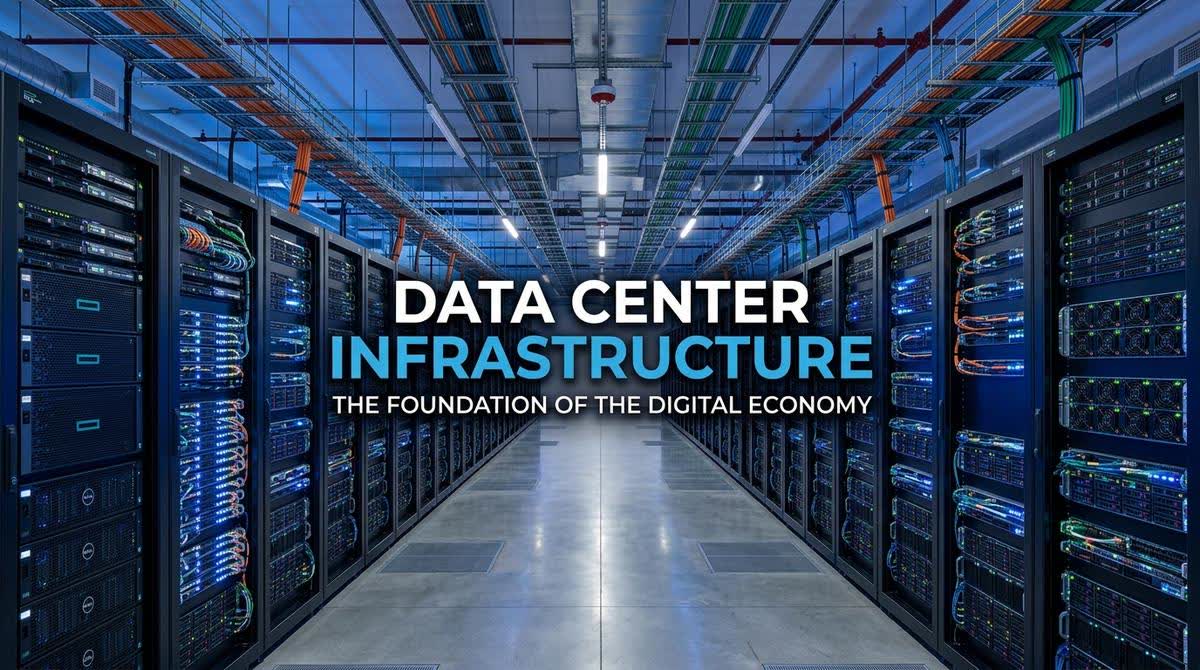
Data Center Infrastructure: The Foundation of the Digital Economy
Data centers are the physical foundation of our digital economy. They house the servers, storage systems, and networking equipment that power everything from cloud computing to artificial intelligence. The infrastructure that supports these facilities is critical to modern business operations.
For data center owners, investors, and operators, understanding the infrastructure requirements is essential. The stakes are high, downtime can cost millions of dollars per hour. The infrastructure must be reliable, efficient, and scalable.
The Strategic Importance of Data Center Infrastructure
Data centers are not ordinary buildings. They are specialized facilities with unique infrastructure requirements that directly impact business operations.
Business Continuity
Data center operations directly support business continuity. Downtime can paralyze an organization. Infrastructure must be designed for maximum reliability and rapid recovery. Investment in infrastructure is investment in business continuity.
Competitive Advantage
Reliable, efficient data centers provide competitive advantage. Organizations can operate with confidence, knowing their infrastructure supports their business. Efficient operations reduce costs and improve margins. Infrastructure investment enables competitive positioning.
Scalability and Growth
Businesses grow and technology requirements evolve. Data center infrastructure must support growth without major renovation. Scalable infrastructure protects long-term value. Investment in scalability supports future growth.
Sustainability
Data centers are significant energy consumers. Sustainability is increasingly important to stakeholders. Efficient infrastructure reduces environmental impact. Sustainability investment supports reputation and regulatory compliance.
Risk Management
Data centers face various risks. Power failure, cooling issues, and security threats are potential problems. Infrastructure must be designed to manage these risks. Risk management protects business operations.
Critical Infrastructure Requirements
Data center infrastructure must meet specific requirements to support reliable operation.
Power Infrastructure
Power is the most critical resource for data centers. Without reliable power, operations stop. Infrastructure must provide reliable, high-quality power to all equipment.
Uninterruptible Power Supply
UPS systems provide backup power during outages. They bridge the gap between utility power failure and generator startup. UPS systems must be sized for the load and provide appropriate runtime. Reliability is essential.
Generators
Generators provide extended power during outages. They must be sized for the full facility load. Fuel supply must be adequate for expected duration. Testing and maintenance are essential.
Power Distribution
Power must be distributed reliably to all equipment. Distribution should be redundant where appropriate. Cable management should support scalability. Distribution infrastructure must be robust.
Cooling Infrastructure
Cooling is essential for reliable data center operation. Equipment generates significant heat that must be removed. Cooling must be reliable and efficient. Failure can be catastrophic.
Chilled Water Systems
Chilled water systems are the most common cooling solution for large data centers. Chillers, pumps, cooling towers, and piping must be reliable. Redundancy is essential. Efficiency is important.
Air Distribution
Air must be distributed properly to remove heat from equipment. Rack layout must support airflow. Cooling should be targeted to heat sources. Air distribution efficiency affects cooling efficiency.
Direct Expansion Cooling
Direct expansion systems provide cooling without chilled water. They are common in smaller facilities. Direct expansion systems are simpler but less efficient. They may be appropriate for some applications.
Network Infrastructure
Network infrastructure connects the data center to the world. Connectivity must be reliable and high-capacity. Multiple providers should be used for redundancy. Network infrastructure is essential.
Fiber Connectivity
Fiber optic connectivity provides high-capacity connections. Fiber infrastructure must be installed properly. Connections must be managed. Fiber infrastructure supports growth.
Copper Cabling
Copper cabling supports equipment connections. Structured cabling must be installed professionally. Cable management must be maintained. Copper infrastructure supports operations.
Security Infrastructure
Data centers require comprehensive security. Physical access must be controlled. Surveillance must be comprehensive. Security must protect operations.
Access Control
Access to data centers must be tightly controlled. Multi-factor authentication is essential. Entry and exit must be logged. Access control protects operations.
Video Surveillance
Video surveillance monitors facility activity. Coverage must be comprehensive. Recording must be maintained. Surveillance supports security and operations.
Fire Protection
Fire protection is essential in data centers. Fire detection and suppression must protect equipment. Systems must minimize damage. Fire protection supports business continuity.
Fire Detection
Fire detection must be sensitive and reliable. Early detection minimizes damage. Detection must be integrated with suppression. Detection supports effective response.
Fire Suppression
Fire suppression must be appropriate for the environment. Gas-based systems protect equipment without water damage. Suppression must be reliable. Systems must be maintained.
Design Considerations
Data center infrastructure design must address several critical factors.
Reliability
Reliability is the primary design objective. Redundancy must be built into critical systems. Failure modes must be analyzed. Design must support reliable operation.
Efficiency
Efficiency reduces operating costs and environmental impact. Power usage effectiveness (PUE) should be optimized. Cooling efficiency is important. Efficiency supports sustainability.
Scalability
Scalability supports growth without major renovation. Infrastructure should be designed for easy expansion. Capacity should be planned for growth. Scalability protects investment.
Maintainability
Maintenance must be possible without interrupting operations. Redundant systems allow maintenance without shutdown. Access must be provided for maintenance. Maintainability supports reliability.
Security
Security must be integrated into design. Physical security protects infrastructure. Network security protects data. Security must be comprehensive.
Implementation Process
Successful data center infrastructure implementation requires careful planning and execution.
Requirements Definition
Define requirements based on business objectives. Understand expected loads and growth. Identify reliability requirements. Document performance expectations.
Design Development
Develop infrastructure design to meet requirements. Consider power and cooling requirements. Plan network and security infrastructure. Develop comprehensive documentation.
Construction and Installation
Construction must meet quality standards. Installation must be professional. Systems must be tested thoroughly. Quality assurance is essential.
Commissioning and Testing
Commissioning verifies system operation. All systems must be tested. Performance must be verified. Documentation must be complete.
Operational Transition
Transition to operation must be managed carefully. Staff must be trained. Operations must be documented. Performance must be monitored.
Future Trends in Data Center Infrastructure
Data center infrastructure continues to evolve with technology.
Efficiency Improvements
Efficiency continues to improve. New technologies reduce power consumption. Cooling improvements reduce energy use. Efficiency supports sustainability.
Edge Computing
Edge computing is changing data center requirements. Smaller facilities are needed. Infrastructure must support distribution. Edge computing is growing.
Artificial Intelligence
AI is impacting data center operations. AI can optimize infrastructure operation. Predictive maintenance is possible. AI supports efficiency.
Liquid Cooling
Liquid cooling is becoming more common. It provides more efficient cooling. Liquid cooling supports higher density. Adoption is increasing.
Sustainability Focus
Sustainability is driving infrastructure changes. Renewable energy integration is important. Carbon reduction is a priority. Sustainability is essential.
The AllandMuchMore Perspective
At AllandMuchMore, we understand the critical importance of data center infrastructure. Our approach reflects this understanding.
Strategic Understanding
We understand data center requirements. We know the business case. Our approach is grounded in business objectives.
Design Excellence
We design infrastructure that meets requirements. Our designs are reliable and efficient. We consider scalability and maintainability.
Quality Implementation
Our experienced teams deliver quality installation. We commission systems thoroughly. Our documentation is complete.
Ongoing Support
We provide training and ongoing support. We help you optimize operations. Our relationship extends beyond installation.
In the End :
Data centers are the physical foundation of the digital economy. The infrastructure that supports them is critical to business operations. Investment in quality infrastructure protects business continuity and supports growth.
Organizations that invest in quality data center infrastructure gain competitive advantage. They operate reliably and efficiently. Their infrastructure supports future growth.
At AllandMuchMore, we have the expertise to help you implement effective data center infrastructure. Our comprehensive approach covers everything from strategic planning through operational support. When you work with us, you are investing in the foundation of your digital future.