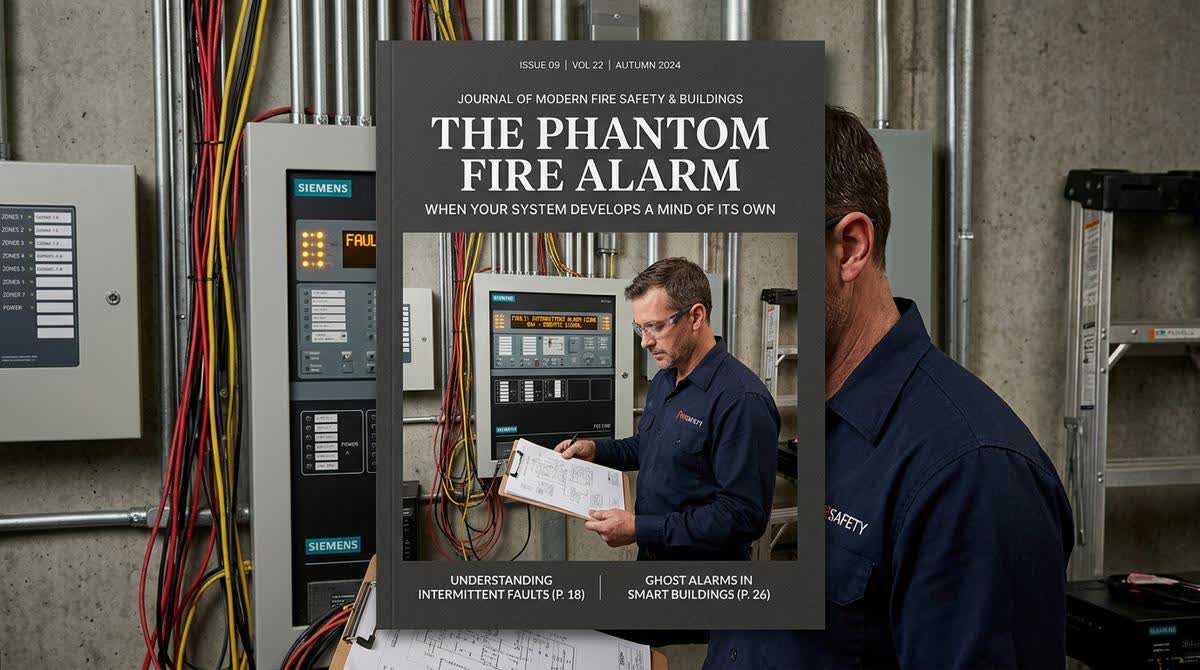
The Fire Alarm System (FAS) is the central nervous system of any building's life safety infrastructure, a silent guardian that stands ready to protect lives and property. But this guardian can become a source of chaos when it begins to generate false or intermittent alarms. The scenario is the stuff of nightmares for any facility manager. In the dead of night, alarms blare, occupants evacuate in confusion, and operations are disrupted. The maintenance team arrives, checks detectors, replaces a few, resets the panel, and everything seems fine. Then, a week later, it happens again. This pattern is a classic sign that you are not dealing with a simple component failure. You are dealing with a systemic issue that requires a sophisticated approach.
Here, the problem is rarely a single faulty detector. It is often a symptom of deeper electrical or environmental issues that demand a shift in perspective. The engineer must evolve from a component-swapper to a system diagnostician, someone who understands the intricate dance of electricity, interference, and aging infrastructure.
Step One: Ruling Out the Obvious
Before diving into the deep end, it is crucial to eliminate the common, surface-level suspects. This is the standard checklist that every technician should follow, and it often resolves the issue.
Environmental Factors:Â Inspect each detector in the affected zone. Is it located near a kitchen, a bathroom, or a dusty workshop? Are there signs of insect infestation or steam exposure? Smoke detectors can be easily fooled by these conditions.
Mechanical Checks:Â Examine the detectors for signs of physical damage, loose connections, or corrosion. Check the manual call points (MCPs) to ensure they haven't been tampered with and that their reset mechanisms are functioning correctly.
Cable Integrity:Â Visually inspect accessible cables for any signs of damage, rodent gnawing, or water ingress. Check the termination points in junction boxes for tightness.
If these standard checks don't yield a clear culprit, you must accept that you are dealing with a more complex problem. The real detective work is about to begin.
Step Two: Investigating the Hidden Causes
This is where the expertise of a seasoned engineer truly shines. The causes here are indirect and often originate from systems far beyond the fire alarm network itself.
Cause One: The Scourge of Stray Currents (Earth Leakage):Â This is perhaps the most insidious and common culprit. In older buildings or those with a compromised electrical earthing system, stray currents from powerful equipment (like elevator motors, large HVAC units, or even nearby power cables) can find their way onto the fire alarm loop. This electrical noise can cause voltage fluctuations on the loop, which the control panel (FACP) might misinterpret as an alarm signal. The solution here is not within the fire alarm panel itself. It requires a comprehensive assessment of the building's main earthing system and a rigorous application of best practices for physical separation. Fire alarm cables must be isolated from high-power sources, and a dedicated, low-resistance earth path is non-negotiable.
Cause Two: The Problem of High Resistance: "Dirty Contacts":Â Over years of operation, the connections in junction boxes and at the end-of-line (EOL) terminations can oxidize. This creates high-resistance points that might not cause a permanent "open circuit" fault, but they can cause signal degradation and voltage instability. In conditions of high humidity, this resistance can fluctuate enough to trick the panel into thinking a detector has activated. The solution is meticulous and often tedious. It involves a methodical inspection of every single connection in the affected loop, cleaning them with contact cleaner, re-terminating them, and ensuring they are tight. Applying anti-oxidant paste to connections in high-humidity areas is a proactive step that can prevent this problem from recurring.
Cause Three: The Invisible Assailant: Electromagnetic Interference (EMI) and Cross-Talk:Â In a modern building, the cable trays are often a chaotic mix of power, data, and control cables. If not properly segregated, the electromagnetic fields from high-power cables can induce unwanted voltages into the sensitive fire alarm cables. Similarly, other ELV systems like public address (PA) or intercom systems can inject electrical noise. This is a classic case of "cross-talk." The solution here is often a complete re-segregation of the cable pathways. If that is impossible, the fire alarm cables must be replaced with shielded versions (like FP200 Gold or equivalent), and the shielding must be properly terminated to earth.
Cause Four: The Ghost in the Machine: Configuration and Firmware:Â In some rare cases, the problem is not hardware at all. It can be a firmware glitch in the FACP or a configuration setting (such as sensitivity thresholds or time delays) that is not optimized for the specific environment. A firmware update from the manufacturer, or a careful review of the panel's programming, can sometimes resolve these phantom events.
The Strategic Mindset: A Systematic Approach to Diagnosis
Solving this puzzle is not a matter of luck. It requires a strategic, surgical approach.
- Document Everything:Â Begin by creating a log of every false alarm. Document the time, the day, the prevailing weather conditions, and any activities happening in the building at the time. Patterns will often emerge. The problem might only occur during the afternoon when the air conditioning load is at its peak, or only on rainy days when humidity is high.
- The Isolation Method:Â This is the most powerful diagnostic tool. Start by disabling half of the loops on the panel. If the alarms stop, you have isolated the problem to that half. Then, divide that half in half, and so on. This method of "binary division" will quickly pinpoint the specific loop or zone that is causing the issue.
- The Replacement Strategy:Â When you suspect a specific component or module, the fastest way to confirm is to replace it with a known, good spare. This is a "test by substitution." While not always cost-effective, it is incredibly efficient for confirming a diagnosis.
- Expert Consultation:Â Do not be too proud to call the manufacturer's technical support. They have a vast database of known issues and may be aware of a specific bug in a particular batch of equipment. This can save you days of head-scratching.
The Final Lesson: Building a Reputation on Reliability
Resolving persistent false alarms is more than a technical fix; it is about restoring trust. When you solve a problem that has baffled everyone else, you prove your worth. You show that you understand the building not as a collection of parts, but as a complex, interconnected system. This is the kind of expertise that earns loyalty, respect, and a reputation as the person or team that can be counted on when the stakes are highest. At AllandMuchMore, we build our reputation on solving these exact types of problems, ensuring that our clients can trust their systems to protect what matters most.