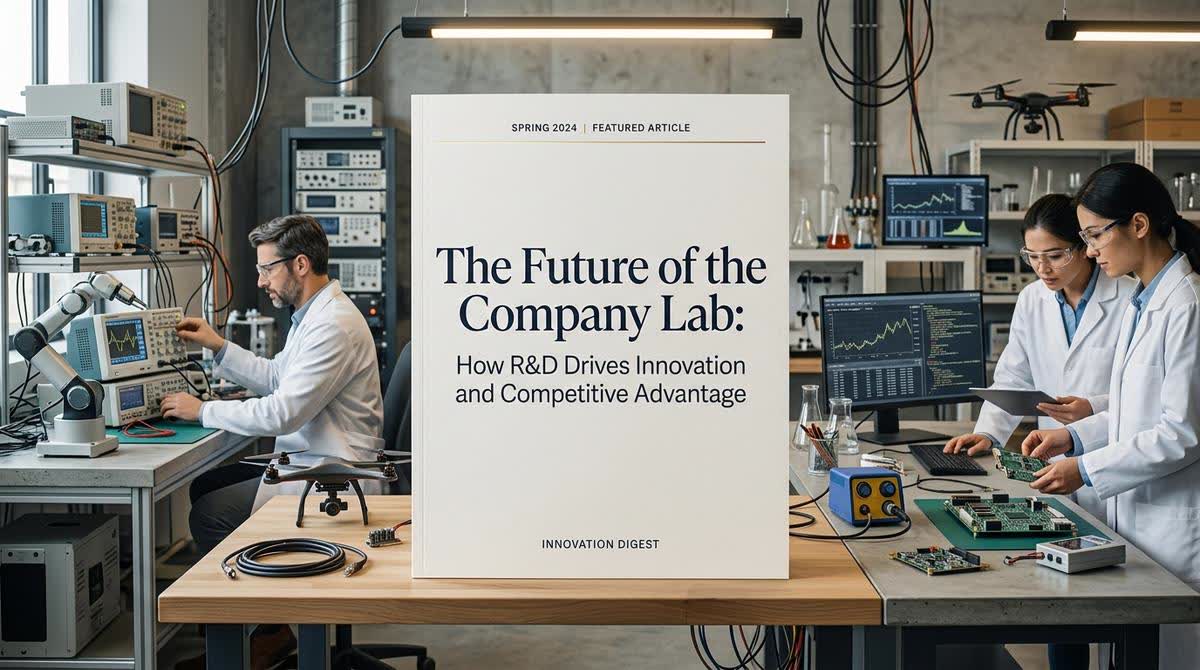
In the technology sector, the only constant is change. New tools emerge, new platforms are developed, and client expectations evolve. The organizations that thrive in this environment are not necessarily the biggest or the oldest; they are the ones that can adapt most quickly and innovate most effectively.
This is where the "company lab" comes in. Whether it is a formal research and development department or a culture of experimentation, the ability to explore new ideas, test new technologies, and learn from failures is the engine of long-term success. This article explores the strategic importance of this capability and provides a framework for building a culture of innovation.
The Strategic Value of R&D
R&D is not a cost center; it is a strategic investment in the future of the company.
Benefit How R&D Drives It
Competitive Differentiation R&D allows you to develop new capabilities and solutions that differentiate you from the competition.
Innovation R&D drives the development of new products, services, and processes.
Client Confidence A visible commitment to R&D builds client confidence. It shows that you are investing in the future of your field.
Talent Attraction The best engineers are drawn to companies that are innovative and forward-thinking. R&D helps you attract and retain top talent.
Risk Management R&D allows you to experiment and learn in a controlled environment, reducing the risk of adopting new technologies on live client projects.
What Happens in a Modern Company Lab
A modern company lab is not just a room with some computers. It is a dedicated space, a set of processes, and a culture that encourages experimentation.
Activity Description
Sandboxing Creating isolated environments where engineers can test new technologies and software without affecting production systems.
Proof of Concept (PoC) Development Building small-scale, functional models to test new ideas or technologies before committing to full-scale development.
Technology Evaluation Systematically evaluating new tools, platforms, and technologies to determine their potential value.
Automation and Tooling Development Building internal tools to automate repetitive tasks, improving efficiency and reducing errors.
Training and Skill Development Providing a space for employees to learn new skills and experiment with new technologies in a safe environment.
Client-Facing Innovation Working directly with clients to develop new solutions that address their specific challenges.
Building a Culture of Innovation: A Framework
Innovation is not an event; it is a mindset. It is a culture that encourages curiosity, experimentation, and learning from failure.
1. Leadership Commitment to Experimentation
Innovation requires leaders who are willing to take risks and invest in the future.
Allocate Time and Budget: R&D should not be squeezed out by operational demands. It must have dedicated time and budget.
Be Willing to Fail: Innovation is inherently risky. Not every experiment will succeed. Leaders must accept this and celebrate the learning, not just the successes.
Lead by Example: Leaders should be curious and engaged in the R&D process. They should be seen to be learning, just like their teams.
2. Dedicated Time and Resources
Engineers need time and space to innovate.
"Innovation Time Off": Give engineers dedicated time to work on their own projects or to explore new technologies.
The "20% Rule": Allow engineers to spend up to 20% of their time on projects outside their core responsibilities.
Dedicated Lab Space: Provide a physical and virtual space where engineers can collaborate and experiment.
3. Embrace Failure as Learning
The fear of failure is the enemy of innovation. A culture that punishes failure will not innovate.
Celebrate Learning: When a project fails, focus on the learning, not the failure. Ask, "What did we learn?" and "How will this help us in the future?"
Share Lessons Learned: Encourage teams to share their experiences, both successes and failures.
"Fail Fast, Learn Fast": Encourage quick experimentation. The faster you fail, the faster you learn.
4. Collaboration and Cross-Pollination
Innovation often happens at the intersection of different disciplines.
Cross-Functional Teams: Bring together engineers, designers, and business professionals to work on projects.
Share Knowledge: Create opportunities for different teams to share their insights and learn from each other.
Attend Industry Events: Encourage employees to attend conferences and workshops to learn about new technologies and trends.
5. Client-Facing Innovation
Some of the best innovations come from solving real client problems.
Co-Development with Clients: Work with clients to develop new solutions that address their specific needs. This builds trust and creates new market opportunities.
Listen to the Frontline: The sales and support teams often have the best insights into client needs. Encourage them to share their observations.
Use Client Feedback: Use feedback from client projects to identify opportunities for innovation.
The AllandMuchMore Approach
At AllandMuchMore, our "company lab" is not just a department; it is a fundamental part of our culture. We invest in R&D, encourage experimentation, and celebrate learning from failure. This is how we stay at the forefront of our field. Our engineers are not just solving today's problems; they are building the tools and capabilities that will solve tomorrow's problems.
The Final Lesson: Innovation Is Not a Luxury; It Is a Requirement
In the fast-moving technology sector, the organizations that innovate will thrive, and those that stand still will be left behind. A culture of innovation is not a luxury; it is a strategic requirement for long-term success. By investing in R&D, embracing experimentation, and learning from failure, you build a resilient organization that is ready for the future.