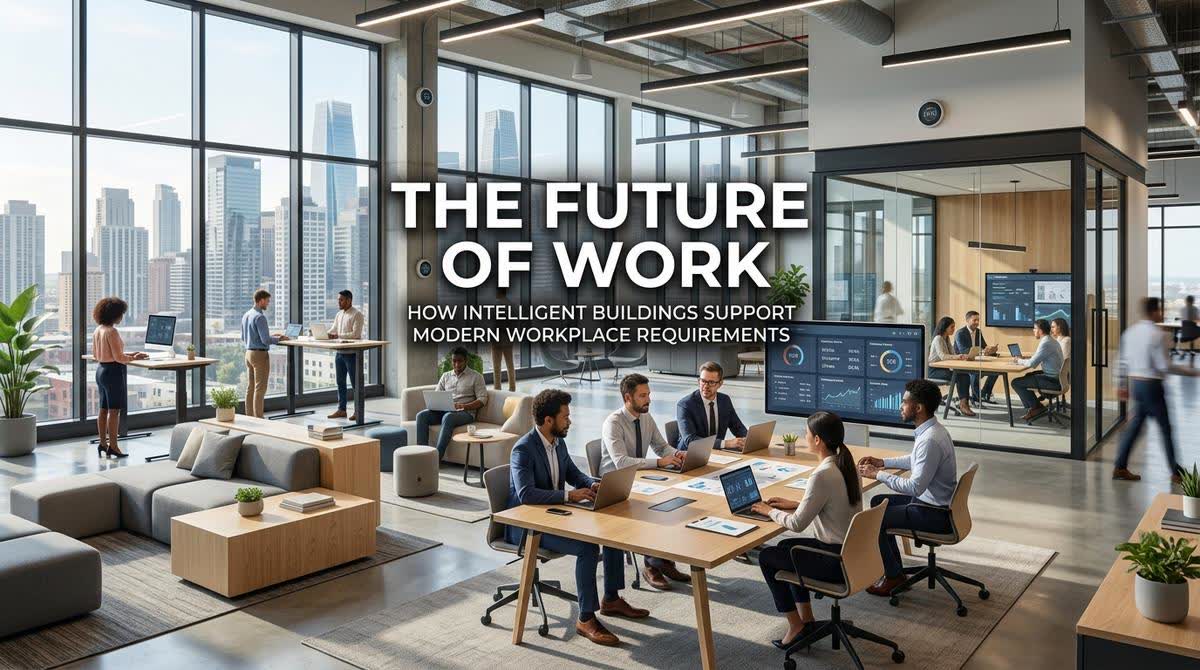
The Future of Work: How Intelligent Buildings Support Modern Workplace Requirements
The workplace is undergoing a transformation as profound as any in its history. The traditional office, with its fixed desks and hierarchical spaces, is giving way to flexible, collaborative environments that support diverse work styles and activities. Technology is the enabler of this transformation, and intelligent buildings are the platform upon which the modern workplace is built.
For building owners, developers, and employers, understanding the relationship between workplace design and building intelligence is essential. The workplace has become a strategic asset that affects talent attraction and retention, productivity, and organizational performance. Intelligent buildings that support modern workplace requirements are increasingly in demand.
The Transformation of the Workplace
Several trends are reshaping the workplace and the buildings that house it.
The Shift to Hybrid Work
Hybrid work models are now standard in many organizations. Employees split their time between the office and remote locations. The office must support this flexible model. Building technology must accommodate hybrid work requirements.
The Focus on Collaboration
Collaboration has become central to workplace design. Meeting spaces, breakout areas, and collaborative zones are prioritized. Technology supports collaboration. Building systems must support collaborative work environments.
The Demand for Flexibility
Workplace flexibility is increasingly important. Spaces must accommodate different activities and changing needs. Furniture must be reconfigurable. Building systems must support flexible space utilization.
The Emphasis on Health and Wellbeing
Health and wellbeing are priorities in workplace design. Air quality, lighting, thermal comfort, and acoustics affect wellbeing. Building systems must support healthy environments.
The Integration of Technology
Technology is pervasive in the modern workplace. Connectivity is essential. AV systems support meetings. Building systems must support technology integration. Technology is central to workplace design.
The Role of Intelligent Buildings in Workplace Success
Intelligent buildings enable the modern workplace by providing the infrastructure and capabilities required.
Connectivity Infrastructure
Connectivity is the foundation of the modern workplace. Reliable high-speed internet and Wi-Fi are essential. Wired and wireless connectivity support all activities. Connectivity infrastructure is critical.
Flexible Space Management
Intelligent buildings support flexible space utilization. Occupancy sensors provide data on space use. Booking systems manage room reservations. Building systems enable flexible use.
Environmental Quality
Intelligent buildings maintain optimal environmental conditions. BMS controls HVAC for comfort and efficiency. Air quality monitoring ensures healthy conditions. Lighting control provides appropriate illumination. Environmental quality supports occupant wellbeing and performance.
Collaboration Support
Intelligent buildings support collaboration. AV systems enable meetings and presentations. Room booking systems support meeting scheduling. Digital signage provides information and wayfinding. Collaboration support is essential for modern workplaces.
User Experience
Intelligent buildings enhance user experience. Interfaces provide control over the environment. Wayfinding systems support navigation. User experience is increasingly important for occupant satisfaction and talent attraction.
Key Systems for Workplace Intelligence
Several ELV systems are essential for workplace intelligence.
Building Management Systems
BMS is the central intelligence for workplace environments. It monitors and controls building systems for performance. BMS enables the environmental quality that supports workplace success.
Occupancy Sensing Systems
Occupancy sensing provides data on space use. Sensors detect presence and activity. Data supports space optimization and facility management. Occupancy sensing is essential for modern workplace management.
Room Booking Systems
Room booking systems manage meeting and collaboration spaces. Users reserve rooms through the system. Integration with calendar systems supports efficient scheduling. Room booking is essential for collaborative workplaces.
AV Systems
AV systems support meetings and presentations. Displays, projectors, and sound systems enable effective communication. Integration with conferencing supports hybrid meetings. AV systems are essential for modern workplaces.
Digital Signage
Digital signage provides information and wayfinding. Displays show room availability and directions. Information supports workplace navigation. Digital signage enhances user experience.
Security Systems
Security systems protect occupants and assets. Access control manages entry. CCTV monitors activity. Security is essential for workplace safety and privacy.
Design Considerations for Workplace Intelligence
Designing intelligent workplaces requires attention to several factors.
User Needs Assessment
Understanding user needs is essential for effective design. Different organizations have different requirements. User engagement informs design decisions. User needs assessment supports successful design.
Activity-Based Design
Activity-based design creates spaces for different activities. Focus spaces support concentration. Collaborative spaces support teamwork. Social spaces support community. Activity-based design requires flexible systems.
Technology Integration
Technology must be integrated into workplace design. Connectivity must be accessible throughout. AV systems must support meetings. Technology integration must be seamless.
Scalability and Flexibility
Workplace requirements change over time. Systems must be scalable and flexible. Future requirements should be anticipated. Scalability protects investment.
Sustainability
Sustainability is increasingly important in workplace design. Energy efficiency, indoor environmental quality, and materials matter. Sustainability supports both environmental and occupant wellbeing.
Implementation Considerations
Implementing workplace intelligence requires effective execution.
Planning and Requirements Definition
Start with a clear understanding of workplace requirements. User engagement is essential. Requirements definition guides subsequent phases.
System Selection and Design
Select systems that support workplace requirements. Integration between systems is essential. Design must be comprehensive and coordinated.
Installation and Commissioning
Installation must be professional and timely. Commissioning verifies system performance. Integration testing ensures systems work together.
Training and Support
Users must understand how to use workplace systems. Training supports effective use. Ongoing support is essential.
Continuous Improvement
Workplace requirements evolve. Systems must be updated and improved. Data drives continuous improvement. Continuous improvement supports workplace success.
The AllandMuchMore Perspective
At AllandMuchMore, we understand the relationship between intelligent buildings and workplace success. Our approach reflects this understanding.
Workplace Understanding
We understand the requirements of the modern workplace. Our approach is grounded in workplace knowledge. We help clients create workplaces that support their objectives.
System Expertise
We bring deep expertise in workplace systems. Our knowledge covers all relevant ELV systems. We design and implement solutions for workplace success.
Integration Capability
We understand the importance of integration. Our approach ensures systems work together. Integration is essential for workplace intelligence.
User Focus
We focus on the user experience. Our solutions support occupant satisfaction. User focus is central to our approach.
In the End :
The future of work is being shaped by technology, changing workforce expectations, and new ways of working. Intelligent buildings are the platform upon which the modern workplace is built. Connectivity, environmental quality, collaboration support, and user experience are all dependent on building intelligence.
Building owners, developers, and employers who invest in workplace intelligence gain competitive advantage. Their workplaces attract and retain talent, support productivity, and enhance organizational performance. The investment in workplace intelligence yields returns through improved business outcomes.
At AllandMuchMore, we have the expertise to help you create intelligent workplaces that support modern work requirements. Our comprehensive approach covers everything from requirements definition through implementation and support. When you work with us, you are investing in workplace success.