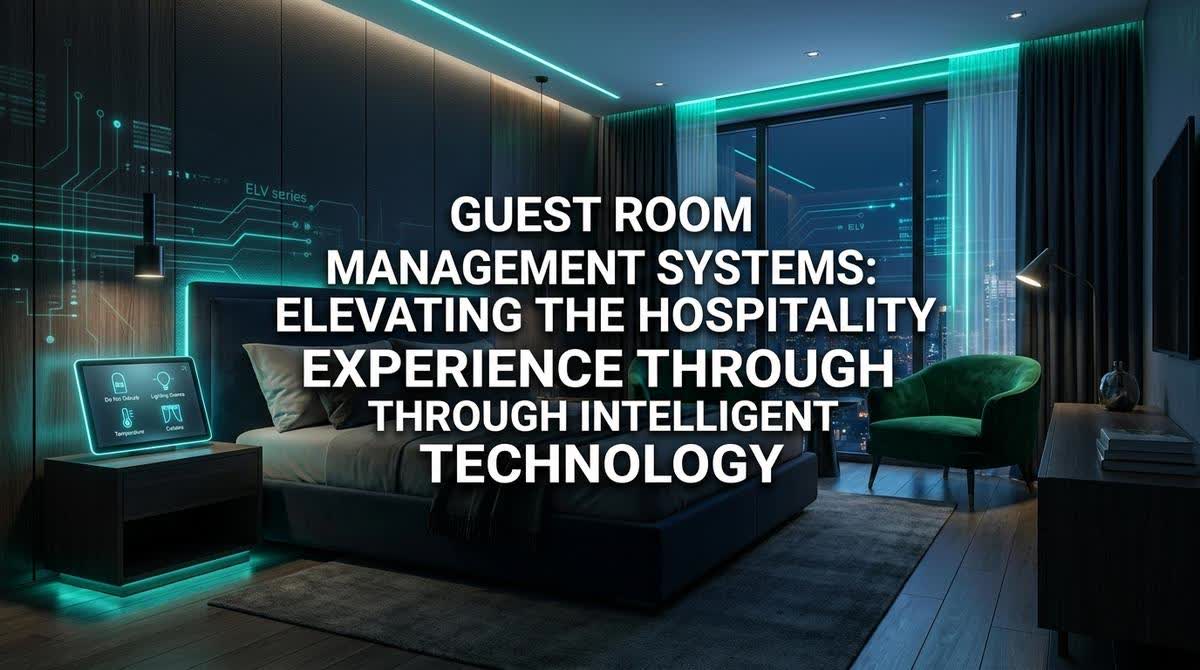
Guest Room Management Systems: Elevating the Hospitality Experience Through Intelligent Technology
Guest Room Management Systems have transformed the hotel industry.
What was once a simple temperature control in guest rooms has evolved into a comprehensive platform that delivers personalized guest experiences, operational efficiency, and revenue opportunities.
For hotel owners, operators, and investors, understanding GRMS is essential for competitive positioning.
The hospitality industry has experienced significant changes in guest expectations.
Today's guests expect more than comfortable accommodations.
They want personalized experiences, intuitive technology, and seamless service.
GRMS delivers these expectations while providing operational benefits for hoteliers.
The Business Case for GRMS
GRMS represents a strategic investment that delivers returns across multiple dimensions of hotel performance.
Guest Experience Enhancement
Personalized guest experiences are the cornerstone of hotel differentiation.
GRMS enables guests to control their environment exactly as they prefer.
Temperature, lighting, entertainment, and even mood settings can be customized.
When guests feel in control of their environment, satisfaction increases.
Operational Efficiency
GRMS provides hotel operations with visibility and control.
The system knows which rooms are occupied and can optimize energy usage accordingly.
Housekeeping knows when rooms are vacant and can prioritize cleaning.
Maintenance can identify issues before guests complain.
The result is more efficient operations with fewer resources.
Energy Cost Reduction
Energy costs represent a significant portion of hotel operating expenses.
GRMS reduces energy consumption through intelligent control.
Unoccupied rooms are maintained at reduced consumption levels.
Occupancy sensors prevent energy waste. Typical energy savings range from twenty to forty percent.
Revenue Generation
GRMS creates revenue opportunities beyond room charges.
In-room services can be promoted through the system.
Upgrades and amenities can be offered through the guest interface.
The system becomes a channel for incremental revenue.
Brand Differentiation
In a competitive market, GRMS differentiates hotel brands.
Guests increasingly choose hotels based on technology experience.
Properties with advanced GRMS command premium rates and attract quality guests.
Understanding GRMS Architecture
GRMS consists of integrated components that work together to deliver the guest experience.
Room Control Units
The room control unit is the intelligence center for each guest room.
It receives inputs from sensors, manages devices, and communicates with the central system.
The control unit coordinates all room functions.
User Interfaces
Guests interact with the system through various interfaces.
Wall-mounted touch panels provide control in the room.
Smartphone applications enable control from anywhere.
Voice control is increasingly available.
The interface must be intuitive and responsive.
Sensors and Detectors
Sensors provide the system with awareness of room conditions.
Occupancy sensors detect guest presence.
Temperature sensors monitor environmental conditions.
Window and door contacts detect openings.
The sensor network enables intelligent control.
Controlled Devices
The system controls various devices throughout the room.
Lighting systems adjust brightness and color.
Thermostats maintain desired temperatures.
Motorized blinds and curtains respond to preferences.
Entertainment systems integrate with guest preferences.
Central Management System
The central management system provides enterprise-wide control.
Hotel management monitors room status, energy consumption, and guest preferences.
System configuration and updates are managed centrally.
Reporting and analytics support operations.
Key GRMS Capabilities
GRMS delivers a comprehensive set of capabilities that enhance guest experience and operational efficiency.
Personalized Guest Experience
The system remembers guest preferences from previous stays.
Preferred temperature settings are automatically applied.
Lighting preferences are recalled.
Entertainment and service preferences are remembered.
Personalization begins before check-in.
Smart Check-In Integration
The system integrates with the property management system to enable smart check-in.
When guests check in, their room is prepared according to preferences.
The room is at the right temperature and lighting levels.
The experience begins smoothly.
Occupancy-Based Control
The system responds to guest presence and absence.
Energy consumption is minimized when rooms are unoccupied.
Comfort settings are restored when guests return.
Efficiency is achieved without compromising comfort.
Do Not Disturb Integration
Do Not Disturb status is managed through the system.
Occupants can request privacy with a simple command.
Status is displayed to staff, preventing unnecessary interruptions.
The system enables delivery of requested services without disturbance.
Service Integration
GRMS integrates with hotel services.
Food and beverage orders can be placed through the system.
Housekeeping requests are routed efficiently.
Concierge services are accessible through the interface.
Guest needs are served promptly.
Entertainment Integration
Entertainment is integrated with the room experience.
Guest preferences for content and channels are remembered.
Streaming services are accessible through the system.
Entertainment becomes part of the personalized experience.
Implementation Considerations
Successful GRMS implementation requires careful attention to several factors.
Guest Experience Design
The guest experience must be designed carefully.
The interface should be intuitive and accessible.
Controls should be responsive and reliable.
The experience should exceed guest expectations.
Technical Infrastructure
Reliable infrastructure is essential for GRMS performance.
Network connectivity must be robust.
Power supply must be reliable.
Devices must be properly installed and configured.
Integration Planning
GRMS must integrate with other hotel systems.
Integration with the property management system is essential for check-in and billing.
Integration with housekeeping systems supports operational efficiency.
Integration with energy management systems supports sustainability.
Staff Training
Hotel staff must understand how to support GRMS.
Front desk staff should understand guest preferences and system capabilities.
Maintenance staff should understand system operation and troubleshooting.
Housekeeping staff should understand status indicators and service integration.
Guest Training
Guests should understand how to use the system.
Simple, intuitive interfaces reduce training needs.
Welcome materials can explain key features.
Staff can assist guests who need help.
Ongoing Support
Ongoing support is essential for system success.
Technical support must be available to address issues.
System updates must be applied to maintain performance.
Continuous improvement should be planned.
Business Case Analysis
The business case for GRMS is compelling when evaluated across multiple dimensions.
Cost Analysis
Initial Investment
GRMS investment varies based on scope and scale.
Typical investment ranges from 2,000 to 5,000 dollars per room for comprehensive systems.
Smaller systems with limited features require less investment.
Operating Costs
GRMS operating costs are modest.
Maintenance, support, and updates represent ongoing expenses.
Savings typically far exceed operating costs.
Return on Investment
Energy Savings
Energy savings are the most quantifiable benefit.
Savings of twenty to forty percent on guest room energy consumption is typical.
For a 200-room hotel, this represents annual savings of 50,000 to 150,000 dollars.
Staff Efficiency
GRMS reduces staff time for routine tasks.
Housekeeping can be more efficient with occupancy data.
Maintenance can address issues proactively.
Staff efficiency savings are significant.
Revenue Impact
GRMS enables incremental revenue.
In-room service promotion generates additional sales.
Upselling through the guest interface creates revenue.
Revenue impact can exceed energy savings.
Guest Satisfaction
Guest satisfaction drives repeat business and positive reviews.
Technology-enabled experiences generate loyalty.
Guest satisfaction contributes to long-term revenue.
Investment Payback
The payback period for GRMS investment typically ranges from one to three years.
Energy savings alone often achieve payback within this timeframe.
The investment becomes increasingly valuable over time.
Future Trends in GRMS
GRMS continues to evolve with technology and guest expectations.
AI-Powered Personalization
Artificial intelligence enables deeper personalization.
Systems learn guest preferences and anticipate needs.
Recommendations become more relevant and timely.
Voice Control Integration
Voice control is increasingly expected.
Integration with major voice platforms enables intuitive control.
Natural language processing improves the experience.
Mobile-First Design
Mobile applications are becoming the primary interface.
Guests increasingly prefer phone control.
Mobile-first design addresses this preference.
Health and Wellness Integration
Health and wellness features are emerging.
Air quality monitoring and control support wellness.
Sleep-enhancing features are being developed.
The room becomes a wellness environment.
Sustainability Focus
Sustainability capabilities are expanding.
Enhanced monitoring and control support environmental goals.
Guests increasingly value sustainable practices.
GRMS supports sustainability achievement.
Contactless Experience
Contactless guest experiences are increasingly important.
Check-in, room control, and service requests should be contactless.
GRMS supports the contactless experience.
The AllandMuchMore Perspective
At AllandMuchMore, we understand the strategic importance of GRMS in the hospitality industry.
Our approach reflects this understanding.
Strategic Assessment
We assess hotel requirements and guest expectations.
We identify opportunities for technology investment.
Our recommendations are grounded in business case analysis.
System Design
We design GRMS solutions that meet hotel requirements.
Our designs reflect best practices and industry standards.
We consider integration, scalability, and guest experience.
Quality Implementation
Our experienced teams deliver quality installation and commissioning.
We ensure that the system functions as designed.
Our documentation is complete and comprehensive.
Ongoing Support
We provide training and ongoing support.
We help you optimize system performance.
Our relationship extends beyond installation.
In the End :
Guest Room Management Systems represent a strategic investment for hotels seeking competitive advantage.
They deliver enhanced guest experience, operational efficiency, energy savings, and revenue opportunities.
The business case is compelling.
Hotels that invest in quality GRMS implementation gain competitive advantage.
They differentiate their brand, attract quality guests, and command premium rates.
Their properties are positioned for future technology evolution.
At AllandMuchMore, we have the expertise to help you implement effective GRMS solutions.
Our comprehensive approach covers everything from strategic planning through ongoing support.
When you work with us, you are investing in hospitality technology that delivers lasting value.