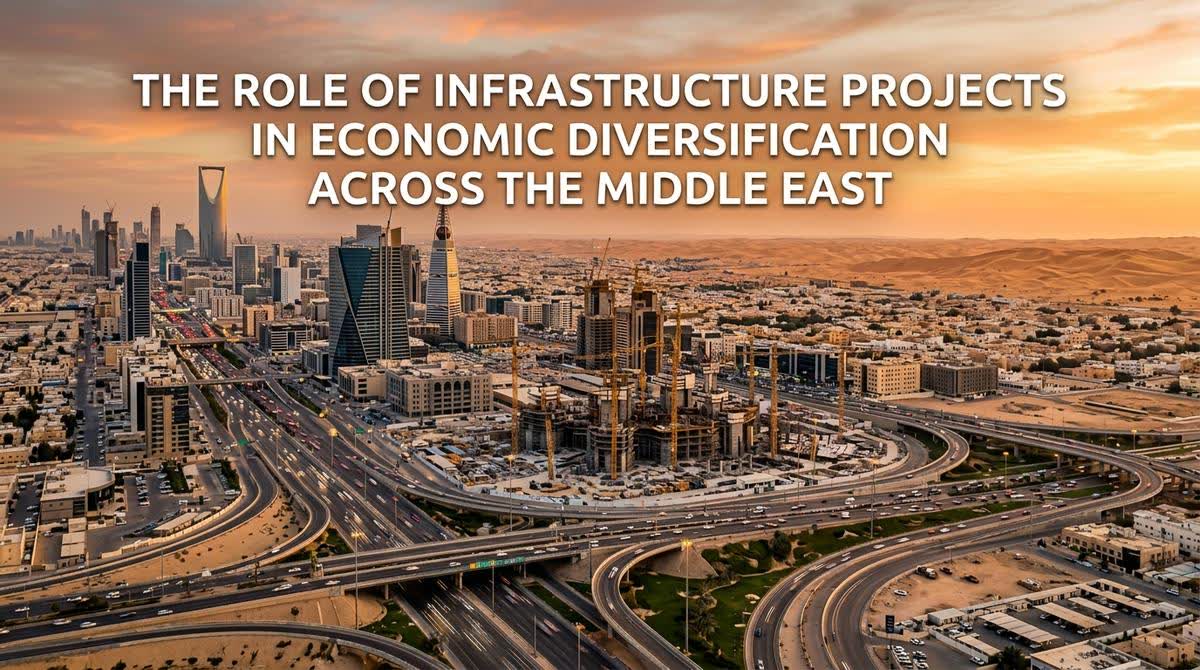
The Role of Infrastructure Projects in Economic Diversification Across the Middle East
Infrastructure development has emerged as a cornerstone of economic diversification across the Middle East, supporting the transformation of regional economies from resource dependence to diversified, sustainable growth. The scale and ambition of infrastructure investment in the region is unprecedented, creating significant opportunities for businesses, investors, and communities.
For contractors, suppliers, and investors in the infrastructure sector, understanding the strategic importance of this investment is essential for positioning and success. The infrastructure boom is not merely a construction cycle but a fundamental transformation of regional economies that will create lasting value for decades to come.
The Context of Economic Diversification
Understanding the economic context of the region is essential for appreciating the importance of infrastructure investment.
Resource Dependence
The economies of the Middle East have historically been heavily dependent on oil and gas resources. This dependence created wealth but also vulnerability to price volatility and long-term resource depletion. The recognition of this vulnerability has driven economic diversification efforts.
Demographic Dynamics
The region has a young, growing population that requires employment opportunities. Infrastructure investment creates jobs directly through construction and indirectly through supporting economic activity. The job creation benefits of infrastructure investment are significant.
Global Economic Trends
The global economy is transitioning toward sustainability and digitalization. The Middle East must participate in this transition to maintain economic relevance. Infrastructure investment that supports sustainability and digitalization positions regional economies for the future.
Competitive Positioning
Regional economies compete for investment, talent, and business activity. Infrastructure quality and capability are factors in competitive positioning. Investment in world-class infrastructure supports regional competitiveness.
Long-Term Vision
The region's leadership has articulated ambitious long-term visions for economic development. Vision 2030 in Saudi Arabia, UAE Centennial 2071, and similar initiatives set the framework for infrastructure investment. The visions provide strategic direction for investment.
Infrastructure as an Economic Development Catalyst
Infrastructure investment serves multiple economic development functions.
Direct Economic Impact
Infrastructure investment creates immediate economic activity through construction spending. The spending supports jobs, business activity, and tax revenue. The direct economic impact is significant and measurable. Infrastructure investment stimulates the economy directly.
Indirect Economic Impact
Infrastructure investment supports economic activity beyond the construction sector. Suppliers and service providers benefit from project spending. The multiplier effect of infrastructure investment is well documented. Infrastructure investment stimulates the broader economy.
Enabled Economic Activity
Infrastructure enables economic activity that would not otherwise be possible. Transportation networks connect markets and enable trade. Energy infrastructure powers industry and commerce. Digital infrastructure supports modern business operations. Infrastructure enables economic activity that creates value.
Attraction of Investment
Quality infrastructure attracts investment. Businesses locate in areas with good infrastructure. Investment follows infrastructure development. Infrastructure investment supports investment attraction.
Support for Industry Development
Infrastructure supports the development of specific industries. Industrial infrastructure supports manufacturing. Technology infrastructure supports digital services. Logistics infrastructure supports trade. Infrastructure supports industry development.
Quality of Life Enhancement
Infrastructure enhances quality of life. Transportation networks improve mobility. Utility infrastructure provides essential services. Urban infrastructure creates livable communities. Quality of life supports talent attraction and retention.
Key Infrastructure Sectors in the Middle East
Several infrastructure sectors are priorities for investment across the region.
Transportation Infrastructure
Transportation infrastructure includes roads, railways, ports, and airports. The region is investing heavily in transportation connectivity. The investment supports trade, tourism, and mobility. Transportation infrastructure is a priority.
Energy Infrastructure
Energy infrastructure includes power generation, transmission, and distribution. The region is investing in both conventional and renewable energy. The investment supports industrial development and sustainability. Energy infrastructure is essential.
Water Infrastructure
Water infrastructure includes supply, treatment, and distribution. The region faces significant water challenges. Investment in water infrastructure supports sustainability and development. Water infrastructure is critical.
Digital Infrastructure
Digital infrastructure includes telecommunications and data networks. The region is investing in broadband, 5G, and data centers. The investment supports the digital economy. Digital infrastructure is increasingly important.
Urban Infrastructure
Urban infrastructure includes buildings, utilities, and public spaces. The region is investing in new cities and urban renewal. The investment supports quality of life and economic activity. Urban infrastructure is a priority.
Industrial Infrastructure
Industrial infrastructure includes ports, industrial zones, and logistics facilities. The region is investing in industrial development. The investment supports economic diversification. Industrial infrastructure is strategically important.
The Role of ELV Systems in Infrastructure Development
ELV systems are increasingly central to infrastructure development, enabling the intelligence and connectivity that modern infrastructure requires.
Smart Infrastructure
ELV systems enable smart infrastructure that senses, responds, and adapts. Intelligent transportation systems optimize traffic flow. Smart grids manage energy distribution. Intelligent buildings optimize operation. Smart infrastructure delivers superior performance.
Connectivity Enablement
ELV systems enable the connectivity that modern infrastructure requires. Communications networks connect people and systems. Data networks support information exchange. Connectivity is essential for modern infrastructure operation.
Sustainability Support
ELV systems support sustainability goals. Energy monitoring and management reduce consumption. Water monitoring and management reduce waste. Sustainability is increasingly central to infrastructure development. ELV systems support sustainability achievement.
Operational Efficiency
ELV systems improve operational efficiency. Automation reduces labor requirements. Optimization reduces resource consumption. Intelligence improves decision-making. Operational efficiency supports economic performance.
User Experience
ELV systems enhance user experience. Intelligent environments respond to user needs. Information systems provide visibility and control. User experience is increasingly important in infrastructure development. ELV systems support user experience.
Investment Opportunities and Considerations
Infrastructure development creates significant investment opportunities across multiple dimensions.
Direct Investment
Direct investment in infrastructure projects offers attractive returns. Public-private partnerships provide opportunities for private capital. Concession arrangements provide long-term revenue streams. Direct investment is the primary opportunity.
Indirect Investment
Indirect investment through suppliers and service providers offers opportunities. Contractors, consultants, and technology providers benefit from infrastructure spending. Supply chain investment can yield returns. Indirect investment is accessible to many businesses.
Technology Investment
Technology is increasingly central to infrastructure development. Investment in technology solutions for infrastructure projects offers opportunities. Technology providers are essential partners in project delivery. Technology investment supports infrastructure development.
Lifecycle Investment
Infrastructure assets require ongoing investment throughout their lifecycle. Operation, maintenance, and upgrade investment creates ongoing opportunities. Lifecycle investment supports long-term value creation. The lifecycle perspective is important.
Regional Considerations
The Middle East presents unique investment characteristics. The scale of projects is substantial. The regulatory environment is evolving. The market is competitive. Regional understanding is essential for investment success.
Implementation Challenges and Solutions
Infrastructure development faces significant challenges that must be addressed.
Financing Constraints
Infrastructure projects require substantial capital. Financing constraints can limit project viability. Innovative financing mechanisms are required. Partnership with private capital can address financing constraints.
Technical Complexity
Modern infrastructure projects are technically complex. Integration of multiple systems is required. Technical complexity creates execution risk. Expertise is required to manage complexity.
Regulatory Requirements
Regulatory requirements for infrastructure projects are extensive. Permitting, approvals, and compliance must be managed. Regulatory requirements can delay projects. Regulatory management is essential.
Stakeholder Management
Infrastructure projects affect many stakeholders. Community engagement is required. Stakeholder management is essential for project success. Poor stakeholder management can derail projects.
Sustainability Requirements
Sustainability requirements for infrastructure projects are increasing. Environmental, social, and governance (ESG) factors must be addressed. Sustainability requirements create both challenges and opportunities.
The AllandMuchMore Perspective
At AllandMuchMore, we understand the strategic importance of infrastructure development in economic diversification. Our approach reflects this understanding.
Strategic Understanding
We understand the economic context and strategic objectives of infrastructure development. Our approach is grounded in regional understanding. We help clients achieve their objectives through effective project delivery.
Comprehensive Capability
We provide comprehensive infrastructure project delivery capability. Our services cover planning, design, installation, and integration. We manage the full scope of project requirements. Our comprehensive capability supports project success.
Technology Expertise
We bring deep technology expertise to infrastructure projects. Our ELV system capabilities support intelligent infrastructure delivery. We enable the connectivity and intelligence that modern infrastructure requires. Our technology expertise is a differentiator.
Quality Delivery
We deliver quality projects that meet client requirements. Our experienced teams follow best practices. Our quality assurance processes verify performance. We deliver assets that perform as designed.
In the End :
Infrastructure development is a cornerstone of economic diversification across the Middle East, creating opportunities for investment, employment, and sustainable growth. The scale and ambition of infrastructure investment in the region is unprecedented, supporting the transformation of regional economies for future success.
Contractors, suppliers, and investors who participate in infrastructure development contribute to economic transformation while capturing significant opportunities. The infrastructure boom is not merely a construction cycle but a fundamental transformation of regional economies.
At AllandMuchMore, we have the expertise to help you succeed in the Middle East infrastructure market. Our comprehensive approach covers everything from strategic planning through project delivery. When you work with us, you are investing in the future of regional economic development.