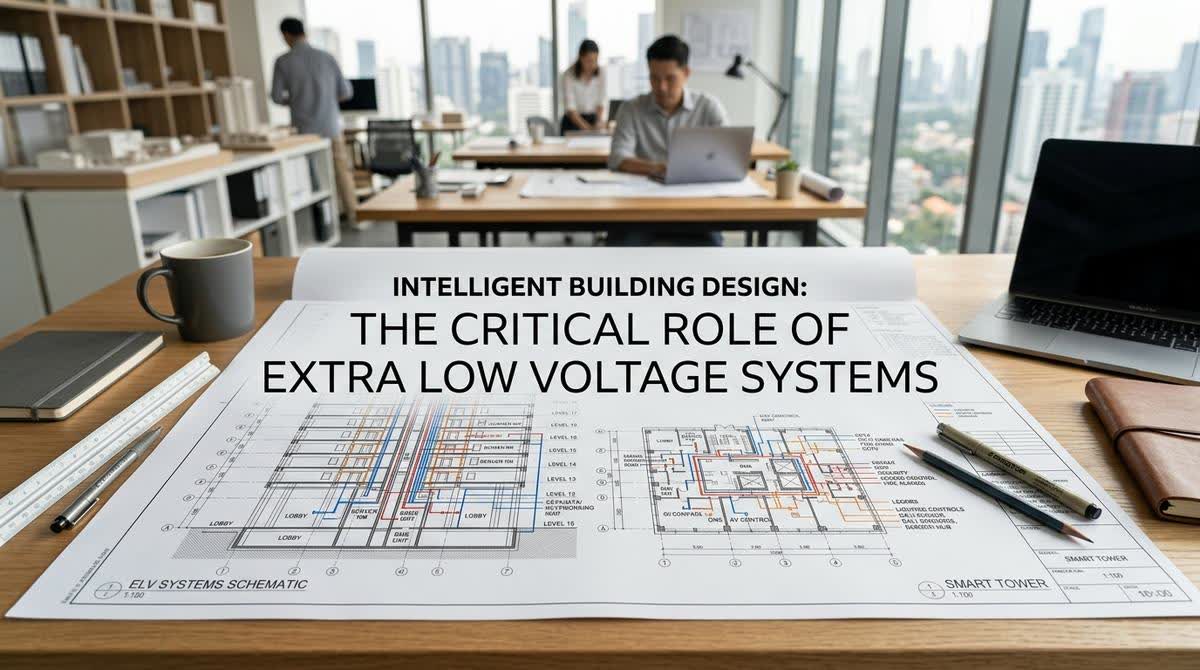
Intelligent Building Design: The Critical Role of Extra Low Voltage Systems
Intelligent building design has evolved from a focus on architecture and structure to encompass the full range of systems that enable building performance. At the heart of this evolution are Extra Low Voltage (ELV) systems, the infrastructure that supports connectivity, security, efficiency, and intelligence in modern buildings.
For architects, engineers, developers, and building owners, understanding the critical role of ELV systems is essential for achieving design excellence and building performance. The integration of ELV systems into the design process has become as important as the integration of mechanical, electrical, and structural systems.
The Evolution of Building Design
Building design has evolved significantly over the past decades, with ELV systems playing an increasingly central role.
From Structure to System
Traditional building design focused primarily on structure and aesthetics. Systems were secondary considerations added after the design was complete. This approach is no longer adequate. ELV systems must be integrated into the design from the beginning. The focus has shifted to creating building systems that enable performance.
From Isolation to Integration
Building systems were traditionally designed in isolation. The HVAC designer worked separately from the electrical designer. The security designer worked separately from the communications designer. This fragmentation is obsolete. Modern building design requires integration across all systems. Integration is essential for intelligent building performance.
From Fixed to Flexible
Traditional building design created fixed environments that were difficult to change. Modern design creates flexible environments that adapt to changing needs. ELV systems enable this flexibility through connectivity and programmability. Design must support evolution.
From Passive to Active
Traditional buildings were passive structures that simply provided shelter. Modern buildings are active environments that sense, respond, and adapt. ELV systems enable this activity through intelligence and control. Design must support active building performance.
From Cost to Value
Traditional design focused on minimizing initial construction cost. Modern design considers the full lifecycle value of the building. ELV systems contribute to value through operational efficiency, market positioning, and user satisfaction. Design must support value creation.
ELV Systems in Building Design
ELV systems encompass a wide range of capabilities that are essential for modern buildings.
Communications Systems
Communications systems provide connectivity throughout the building. Structured cabling supports data and voice communications. Wireless networks provide mobile connectivity. Communications are essential for modern building operation and occupant satisfaction.
Security Systems
Security systems protect occupants and assets. CCTV, access control, and intrusion detection provide comprehensive security capability. Security is a fundamental requirement for most buildings. Security systems must be integrated into the design.
Building Management Systems
BMS provides central intelligence for building operation. BMS monitors and controls building systems for efficiency and performance. BMS is essential for modern building operation. BMS must be integrated into the design.
Life Safety Systems
Life safety systems protect occupants in emergencies. Fire alarm, voice evacuation, and emergency lighting are critical systems. Life safety is a fundamental requirement. Life safety systems must comply with regulations.
User Experience Systems
User experience systems enhance occupant satisfaction. AV systems support meetings and presentations. Digital signage provides information. User experience systems are increasingly important for tenant satisfaction and retention.
Sustainability Systems
Sustainability systems support environmental performance. Energy monitoring, lighting control, and HVAC optimization reduce consumption. Sustainability is increasingly important for building owners and occupants. Sustainability systems must be integrated into the design.
The Design Process for ELV Systems
ELV system design follows a structured process that must be integrated into the overall building design.
Requirements Definition
Requirements definition establishes what the building needs from ELV systems. Stakeholder requirements must be identified. Regulatory requirements must be understood. The requirements definition sets the foundation for system design.
Concept Design
Concept design establishes the overall approach to ELV systems. System selection is based on requirements. Integration strategy is developed. Concept design guides subsequent detailed design.
Detailed Design
Detailed design specifies system components and configurations. Drawings and specifications are developed. Coordination with other disciplines is essential. Detailed design is the basis for implementation.
Integration Design
Integration design specifies how systems will work together. Interfaces are defined. Integration architecture is developed. Integration design is essential for system interoperability.
Verification and Validation
Design verification confirms that the design meets requirements. Validation ensures that the design will work as intended. Verification and validation reduce risk.
Integration with Other Building Systems
ELV systems must be integrated with other building systems for effective performance.
Architectural Integration
ELV systems must be accommodated in the building architecture. Space for equipment must be provided. Cable pathways must be integrated into the structure. Mounting for devices must be planned. Architectural integration is essential for successful ELV system implementation.
Mechanical System Integration
ELV systems must integrate with mechanical systems. BMS controls HVAC equipment. Sensors monitor mechanical systems. Integration is essential for building performance.
Electrical System Integration
ELV systems depend on the electrical system for power. UPS and backup power may be required for critical systems. Integration with electrical systems is essential.
Structural Integration
ELV systems require structural support for equipment and cabling. Mounting requirements must be accommodated. Structural integration is important for system reliability.
Interior Design Integration
ELV systems affect interior design. Device locations affect aesthetics. User interfaces affect occupant experience. Interior design integration is important for building aesthetics and user satisfaction.
Design Considerations for the Middle East
The Middle East presents unique considerations for ELV system design.
Climate Resilience
The extreme climate of the region affects system selection and design. Equipment must withstand high temperatures. Cooling requirements are significant. Climate resilience is essential for system reliability.
Market Expectations
The Middle East market has high expectations for building intelligence. Premium properties must demonstrate advanced capabilities. Design must meet or exceed market expectations.
Regulatory Requirements
Regulatory requirements for ELV systems vary by location and building type. Fire safety, accessibility, and sustainability regulations apply. Compliance is essential.
International Standards
The region operates to international standards. Design must meet international quality standards. International standards provide a benchmark.
Cultural Considerations
Cultural considerations affect building design and use. The needs of users must be understood. Design must be appropriate for the cultural context.
The AllandMuchMore Approach to ELV Design
At AllandMuchMore, we bring comprehensive expertise to ELV system design.
Integrated Design
We integrate ELV system design with overall building design. Our approach is collaborative and coordinated. We work with all design disciplines. Integrated design supports successful outcomes.
Requirements Focus
We focus on understanding and meeting requirements. We work closely with stakeholders to identify needs. Our design meets requirements effectively.
Quality Design
We deliver quality design that follows best practices. Our designs are comprehensive and accurate. We ensure design quality.
Implementation Support
We support implementation of our designs. We assist with procurement and installation. We support commissioning and handover. Our support ensures successful outcomes.
In the End :
Extra Low Voltage systems are the foundation of intelligent building design, enabling the connectivity, security, efficiency, and intelligence that define modern buildings. Understanding the critical role of ELV systems is essential for architects, engineers, developers, and building owners who seek to achieve design excellence and building performance.
Buildings that incorporate comprehensive ELV systems command premium rents, attract quality tenants, and operate efficiently. The integration of ELV systems into the design process is essential for creating buildings that deliver lasting value.
At AllandMuchMore, we have the expertise to help you integrate ELV systems into your building design. Our comprehensive approach covers everything from requirements definition through implementation support. When you work with us, you are investing in intelligent building design that delivers results.