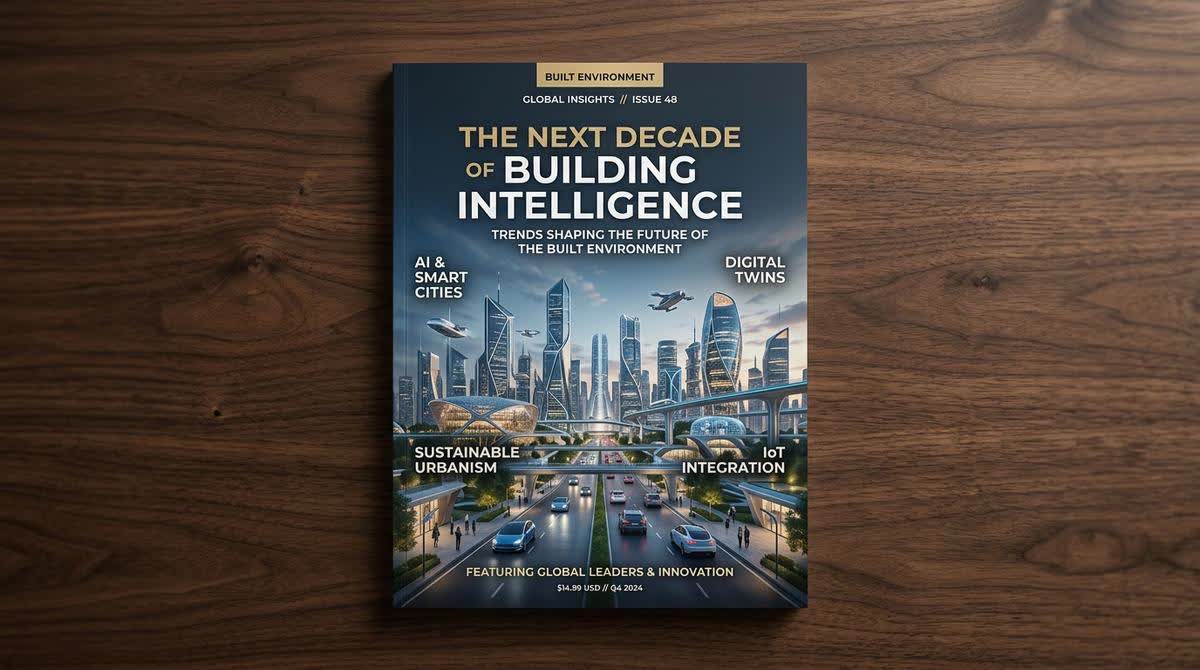
The Next Decade of Building Intelligence: Trends Shaping the Future of the Built Environment
The built environment is on the cusp of transformation as profound as any in its history. Technology, sustainability, and evolving user expectations are converging to reshape buildings and the systems that enable them. The next decade will bring changes that we can only begin to imagine, creating opportunities for those who anticipate and embrace them.
For building owners, developers, investors, and professionals in the built environment, understanding the trends that will shape the future is essential for strategic planning and competitive positioning. This article explores the key trends that will define building intelligence over the next decade.
The Forces Driving Change
Several powerful forces are driving the transformation of the built environment.
Technological Advancement
Technology continues to advance at an accelerating pace. Artificial intelligence, IoT, connectivity, and data analytics are creating new capabilities. The technology that enables building intelligence is becoming more powerful and accessible. Technological advancement is the primary driver of change.
Sustainability Imperatives
Sustainability requirements are becoming more urgent and comprehensive. Climate change is driving regulatory and market responses. Buildings must reduce emissions and resource consumption. Sustainability is becoming central to building design and operation.
Evolving User Expectations
Users of buildings have evolving expectations. They demand convenience, personalization, and sustainability. Technology has raised expectations for user experience. Meeting user expectations is essential for building success.
Economic Pressures
Economic pressures are driving efficiency. Competition, regulation, and cost pressures demand optimization. Buildings must operate more efficiently with fewer resources. Efficiency is essential for economic viability.
Demographic Changes
Demographic changes are affecting building requirements. Urbanization continues. Population aging is creating new needs. Workforce demographics are changing. Building design must respond to demographic trends.
Key Trends Shaping Building Intelligence
Several trends will define the next decade of building intelligence.
Artificial Intelligence Integration
Artificial intelligence will become pervasive in building systems. AI will analyze data to optimize operation. Predictive capabilities will anticipate needs. AI will enable autonomous operation. AI is the most significant trend.
Digital Twins
Digital twins will become standard for building management. Virtual representations of buildings will support simulation and optimization. Digital twins will enable training and planning. Digital twins will transform building management.
Predictive and Prescriptive Analytics
Building systems will evolve from descriptive to predictive and prescriptive. Historical data will inform predictions. Recommendations will guide action. Analytics will support proactive management. Predictive capabilities will become standard.
Autonomous Systems
Building systems will become increasingly autonomous. Operation will be self-optimizing. Decisions will be made by systems. Human intervention will be reduced. Autonomy will improve efficiency and reduce costs.
Connectivity Evolution
Connectivity will continue to evolve. 5G will become widespread. 6G will emerge. Edge computing will be deployed. Connectivity will support new capabilities. Evolution will continue.
Sustainability Integration
Sustainability will be integrated into all building systems. Energy optimization will be standard. Carbon tracking will be required. Water management will be essential. Sustainability will be foundational.
User Experience Focus
User experience will become central to building design. Personalization will be expected. Convenience will be required. Technology will support user experience. User focus will drive investment.
Health and Wellness Integration
Health and wellness will be integrated into building systems. Air quality monitoring will be standard. Lighting will support circadian rhythms. Wellness features will be expected. Health focus will increase.
Cybersecurity Emphasis
Cybersecurity will be a priority for building systems. Protection of connected systems will be essential. Security will be designed in from the beginning. Cybersecurity investment will grow.
Modular and Adaptive Systems
Building systems will become more modular and adaptive. Reconfiguration will be easier. Upgrades will be simpler. Adaptability will be valued. Flexible systems will be preferred.
Implications for Building Professionals
The trends shaping building intelligence have implications for all building professionals.
Design Professionals
Architects and engineers must incorporate intelligence into design from the beginning. Systems thinking will be essential. Technology integration must be designed, not added later. Design professionals must evolve their approach.
Construction Professionals
Construction must accommodate technology infrastructure and intelligent systems. Quality installation is essential. Coordination between trades must be managed. Construction professionals must adapt their practices.
Facility Managers
Facility managers must develop new skills for intelligent building operation. Data analysis will become more important. System optimization will be required. Facility managers must evolve.
Building Owners
Building owners must understand intelligence requirements and investment implications. Technology investment must be strategic. Lifecycle value must be considered. Owners must embrace intelligence.
Investors
Investors must understand the value of building intelligence. Intelligent buildings command premium valuations. Sustainability and technology are investment criteria. Investors must adapt their analysis.
Strategic Implications
The trends shaping building intelligence have strategic implications for building investment.
Investment Focus
Investment must focus on building intelligence. Technology is essential for building performance. Sustainability is a requirement for market success. Investment focus must reflect priorities.
Asset Positioning
Buildings must be positioned for future requirements. Intelligence and sustainability will be essential. Positioning protects asset value. Asset strategies must anticipate future needs.
Competitive Differentiation
Building intelligence will be a source of competitive differentiation. Buildings with superior intelligence will command premium prices. Differentiation through technology will increase. Competitive strategies must emphasize intelligence.
Risk Management
Technology and sustainability risks must be managed. Obsolescence, cybersecurity, and regulatory risks are significant. Risk management must be comprehensive. Risk awareness is essential.
Long-Term Planning
Building investment must consider the long term. Intelligence requirements will evolve. Sustainability will become more important. Planning must anticipate future requirements.
The AllandMuchMore Perspective
At AllandMuchMore, we are focused on the future of building intelligence. Our approach reflects this focus.
Strategic Anticipation
We anticipate the trends that will shape building intelligence. Our planning is forward-looking. We help clients prepare for the future. Anticipation is central to our approach.
Comprehensive Understanding
We understand the full scope of building intelligence. Our expertise covers technology, sustainability, and user experience. We see the complete picture. Comprehensive understanding supports effective decisions.
Innovation Focus
We embrace innovation in building intelligence. Our solutions incorporate the latest technology. We help clients adopt new capabilities. Innovation is central to our approach.
Future-Ready Solutions
We deliver future-ready solutions for our clients. Our systems are designed for evolution. We anticipate future requirements. Future readiness protects investment.
In the End :
The next decade will bring unprecedented change to the built environment, driven by technology, sustainability, and evolving user expectations. Building intelligence will become more sophisticated, more integrated, and more essential to building performance. Understanding the trends that will shape the future is essential for strategic planning and competitive positioning.
Building owners, developers, investors, and professionals who anticipate and embrace these trends gain competitive advantage. Their buildings will perform better, command premium positions, and deliver lasting value. The future of building intelligence is being shaped today.
At AllandMuchMore, we are committed to helping our clients navigate the future of building intelligence. Our expertise covers the full spectrum of capabilities required for success. When you work with us, you are investing in the future of the built environment.