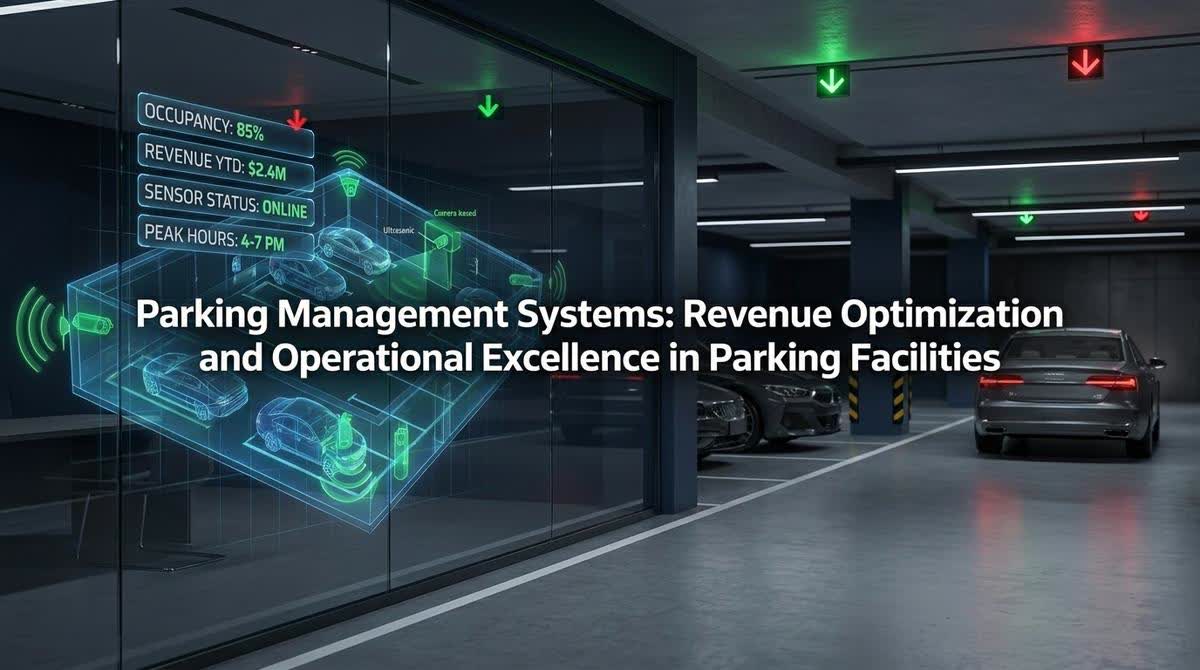
Parking Management Systems: Revenue Optimization and Operational Excellence in Parking Facilities
Parking facilities are significant revenue generators for many organizations, yet they are often managed with outdated systems and missed opportunities.
Modern Parking Management Systems transform parking operations from manual, labor-intensive processes to automated, data-driven operations that maximize revenue and efficiency.
For parking facility owners, operators, and investors, understanding the capabilities and benefits of modern parking management systems is essential for making informed investment decisions.
The Business Case for Parking Management Systems
Parking Management Systems deliver compelling value across multiple dimensions of parking operations.
Revenue Optimization
Revenue leakage is a significant issue in parking operations.
Manual systems lose revenue through errors, theft, and inefficiency.
Automated systems capture all transactions and eliminate revenue leakage.
Dynamic pricing capabilities maximize revenue based on demand.
The return on investment is substantial.
Operational Efficiency
Automated systems significantly reduce labor requirements.
Entry and exit processing is automated.
Payment processing is efficient.
Management and reporting are simplified.
Staff can focus on value-added activities rather than routine processing.
User Experience Enhancement
Users expect convenient, efficient parking experiences.
Automated systems provide smooth entry and exit.
Multiple payment options accommodate user preferences.
Clear guidance and signage improve the experience.
Positive experiences encourage repeat use.
Security Improvement
Automated systems enhance parking facility security.
Entry and exit are controlled and documented.
Video surveillance integrates with access control.
Incident investigation is supported by records.
Security incidents are reduced.
Data and Analytics
Parking management systems provide valuable data for operations.
Occupancy data supports capacity planning.
Revenue data supports financial management.
Usage patterns identify optimization opportunities.
Data drives continuous improvement.
Understanding Parking Management System Architecture
Modern Parking Management Systems consist of integrated components that work together to deliver comprehensive capabilities.
Entry and Exit Controls
Entry and exit equipment controls vehicle access.
Barriers and gates manage vehicle flow.
Ticket dispensers and readers process entry and exit.
License plate recognition provides automated identification.
The entry and exit system is the user interface.
Payment Processing
Payment processing capabilities support revenue collection.
Ticket-based payment allows cash and credit transactions.
Pre-paid and subscription payments support regular users.
Mobile payment options provide convenience.
Contactless payment is increasingly important.
Access Control Integration
Access control capabilities manage user permissions.
Employee access is managed through credentials.
VIP and reserved parking access is controlled.
Event parking access is managed temporarily.
Access control supports diverse user groups.
Video Surveillance
Video surveillance supports security and operations.
Cameras monitor entry and exit points.
License plate recognition cameras capture vehicle information.
Surveillance supports incident investigation.
Integration with access control provides comprehensive security.
Management Software
Management software provides system administration and oversight.
Real-time monitoring shows facility status.
Reporting and analytics support management.
Configuration and management capabilities enable system control.
The management interface is essential for operations.
Integration Capabilities
Integration extends system capabilities.
Integration with facility management systems supports operations.
Integration with payment systems enables diverse payment options.
Integration with security systems provides comprehensive security.
Key Capabilities and Features
Modern Parking Management Systems provide comprehensive capabilities.
Automated Entry and Exit
Vehicles enter and exit automatically without staff intervention.
Ticket dispensing and collection are automated.
License plate recognition enables faster processing.
The automation reduces labor requirements and improves efficiency.
Dynamic Pricing
Dynamic pricing capabilities maximize revenue based on demand.
Rates can be adjusted based on time of day and occupancy.
Peak pricing captures value during high demand.
Discounted rates attract customers during low demand.
Revenue is optimized.
Payment Flexibility
Multiple payment options accommodate user preferences.
Cash and credit card payments are standard.
Mobile payment options provide convenience.
Pre-paid and subscription options serve regular users.
Flexibility improves user experience.
Occupancy Monitoring
Real-time occupancy monitoring provides visibility.
Available spaces are displayed to users.
Occupancy data supports management decisions.
Capacity planning is informed by data.
Operations are optimized.
Reporting and Analytics
Comprehensive reporting supports management.
Revenue reports show financial performance.
Occupancy reports show utilization.
Usage patterns identify optimization opportunities.
Data drives continuous improvement.
Integration with Guidance Systems
Parking guidance systems direct users to available spaces.
Occupancy data is shared with guidance systems.
Users are guided efficiently.
The experience is improved.
Operations are optimized.
Implementation Considerations
Successful implementation requires careful planning and execution.
Requirements Definition
Begin by defining facility requirements.
Understand user needs and expectations.
Identify operational objectives.
Document performance expectations.
System Selection
Select a system that meets facility requirements.
Consider vendor capabilities and support.
Evaluate system features and performance.
Choose a system with appropriate scalability.
Installation Planning
Plan installation to minimize operational disruption.
Coordinate with other facility work.
Plan for commissioning and testing.
Schedule installation carefully.
Integration Planning
Plan integration with other systems.
Integration with facility management systems should be specified.
Integration with payment systems should be configured.
Integration should be tested thoroughly.
Staff Training
Provide comprehensive training for staff.
Operators must understand system operation.
Support staff must understand their roles.
Documentation must be complete.
User Communication
Communicate system changes to users.
Explain new features and procedures.
Address user concerns.
Support user adoption.
Operational Benefits
Labor Cost Reduction
Automated systems significantly reduce labor requirements.
Entry and exit processing is automated.
Payment processing is efficient.
Staff can focus on higher-value activities.
Revenue Increase
Revenue leakage is eliminated.
Dynamic pricing captures additional revenue.
Transaction processing is accurate.
Revenue is maximized.
Maintenance Reduction
Automated systems require less maintenance than manual equipment.
System components are designed for reliability.
Maintenance costs are reduced.
Improved User Experience
Users experience smoother, more convenient operations.
Entry and exit are faster.
Payment options are flexible.
The experience is improved.
Enhanced Security
Security is improved through automation.
Entry and exit are controlled and documented.
Surveillance supports incident response.
Security incidents are reduced.
Future Trends in Parking Management
Parking management continues to evolve with technology.
Mobile-First Experience
Mobile applications are becoming the primary interface.
Users can manage parking through their phones.
Payment, guidance, and management are mobile-enabled.
The mobile experience is essential.
Contactless Operation
Contactless operation is increasingly important.
Entry and exit without interaction are preferred.
Contactless payment is standard.
The contactless experience is expected.
AI and Machine Learning
AI capabilities are transforming parking management.
Occupancy prediction enables proactive management.
Revenue optimization through AI is effective.
Data analytics support continuous improvement.
Integration with Smart City
Parking management integrates with smart city initiatives.
Occupancy data supports city-wide planning.
Integration with transportation systems enables comprehensive mobility.
Smart city alignment is increasingly important.
Sustainability Focus
Sustainability is becoming a priority.
Electric vehicle charging integration is important.
Reduced congestion supports sustainability.
Environmental performance is measured.
The AllandMuchMore Perspective
At AllandMuchMore, we understand the strategic importance of parking management systems.
Our approach reflects this understanding.
Strategic Assessment
We assess facility requirements and objectives.
We identify opportunities for improvement.
Our recommendations are grounded in business case analysis.
System Design
We design systems that meet facility requirements.
Our designs reflect best practices.
We consider user experience, security, and efficiency.
Our designs are practical and maintainable.
Quality Implementation
Our experienced teams deliver quality installation and commissioning.
We ensure system reliability.
Our documentation is complete.
Ongoing Support
We provide training and ongoing support.
We help you optimize system performance.
Our relationship extends beyond installation.
In the End :
Parking Management Systems represent a strategic investment for parking facility owners and operators.
They deliver revenue optimization, operational efficiency, enhanced user experience, and improved security.
The business case is compelling.
Facilities that invest in quality parking management systems gain competitive advantage.
They maximize revenue and minimize costs.
Their facilities are positioned for future technology evolution.
At AllandMuchMore, we have the expertise to help you implement effective parking management systems.
Our comprehensive approach covers everything from strategic planning through ongoing support.
When you work with us, you are investing in parking operations that deliver lasting value.