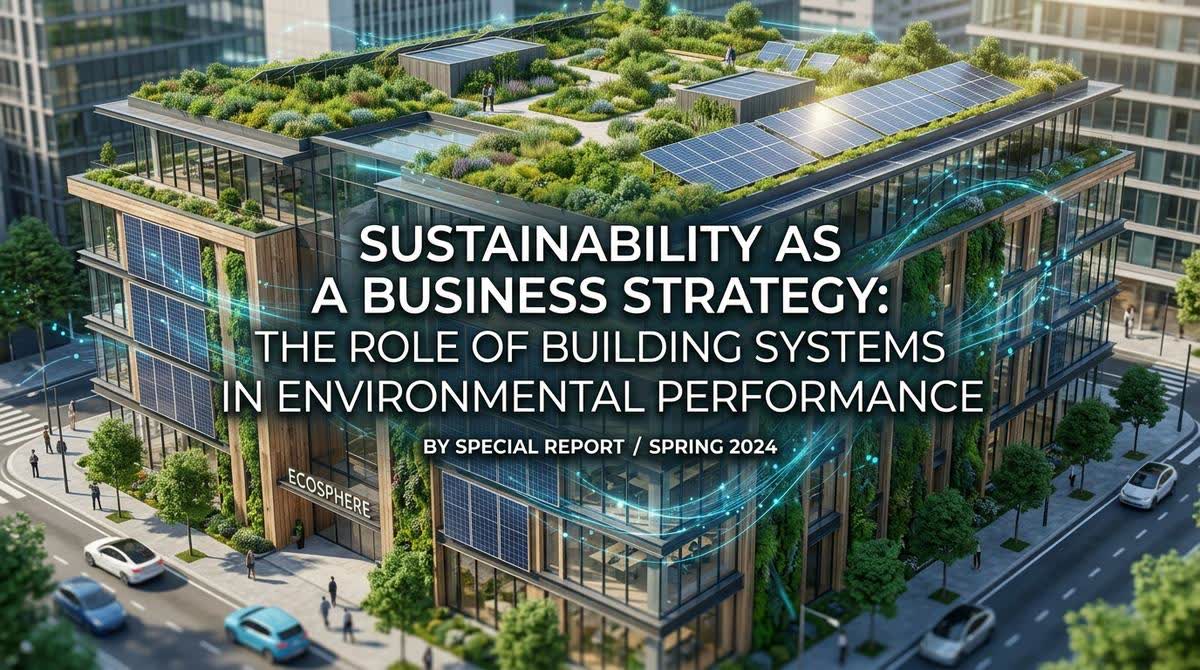
Sustainability as a Business Strategy: The Role of Building Systems in Environmental Performance
Sustainability has evolved from a compliance obligation to a strategic business imperative that creates value across multiple dimensions. For building owners, developers, and investors, understanding the role of building systems in achieving sustainability goals is essential for competitive positioning and long-term success.
The Middle East is at the forefront of sustainable building development, with initiatives like Estidama, Mostadam, and Net Zero commitments driving innovation in building performance. The investment in sustainability is not merely an expense but a value-creating opportunity that delivers returns through reduced costs, enhanced market position, and risk management.
The Strategic Case for Sustainability
Sustainability is a business strategy that delivers value across multiple dimensions.
Cost Reduction
Sustainable buildings consume less energy and water, resulting in lower operating costs. A 50,000 square meter commercial building with comprehensive sustainable systems typically achieves annual energy savings of 150,000 to 400,000 dollars. Water savings add additional value. The cost reduction is substantial and ongoing.
Revenue Enhancement
Sustainable buildings command premium rents and attract quality tenants. Studies consistently show rental premiums of five to fifteen percent for certified green buildings. Higher occupancy rates and reduced tenant turnover contribute to revenue enhancement. The revenue benefits are significant.
Risk Management
Sustainability investment reduces regulatory risk and positions buildings for future requirements. As carbon pricing and emissions regulations become more common, buildings with low carbon footprints are better positioned. Sustainability investment protects against future regulatory costs.
Market Positioning
Sustainability achievement differentiates properties in the market. Tenants increasingly prefer sustainable buildings. Corporate sustainability commitments drive demand for green space. Sustainability supports premium positioning.
Talent Attraction
Sustainable buildings attract and retain talent. Occupants value healthy, comfortable environments. Sustainability is increasingly important to employees. Talent attraction supports business performance.
Long-Term Value
Sustainability supports long-term asset value. Buildings with strong environmental credentials maintain value as market expectations evolve. Sustainable buildings are better positioned for future market conditions.
Building Systems That Enable Sustainability
Several building systems are essential for sustainability achievement.
Building Management Systems
BMS is the central intelligence for sustainable building operation. It monitors, controls, and optimizes building systems for efficiency. BMS enables comprehensive sustainability management. BMS is essential for sustainability achievement.
Lighting Control Systems
Lighting control reduces consumption through strategies including daylight harvesting, occupancy-based operation, and scheduling. Lighting typically accounts for ten to fifteen percent of building energy use. Lighting control delivers significant savings.
HVAC Optimization Systems
HVAC accounts for thirty to forty percent of building energy consumption. Optimization through advanced controls can reduce consumption by twenty to thirty percent. HVAC optimization is essential for energy efficiency.
Energy Monitoring Systems
Energy monitoring provides visibility into consumption patterns. Data from monitoring supports optimization and continuous improvement. Sub-metering enables allocation of costs and creates incentives for conservation. Energy monitoring is essential for effective management.
Renewable Energy Integration
Renewable energy sources reduce dependence on grid electricity. Solar PV is the most common renewable source in the Middle East. Integration with building systems optimizes renewable energy use. Renewable energy supports sustainability goals.
Water Management Systems
Water conservation is essential in the water-stressed Middle East. Smart water management reduces consumption by monitoring use and detecting leaks. Water management supports sustainability and reduces costs.
Certification and Compliance
Sustainability certification provides third-party verification of performance.
LEED Certification
LEED is the most widely recognized green building certification. ELV systems contribute to many LEED credits. Energy optimization, indoor environmental quality, and innovation credits are supported by ELV systems. LEED certification adds market value.
Estidama Certification
Estidama is the UAE's sustainability framework. ELV systems contribute to Estidama certification. Energy efficiency, indoor environmental quality, and management requirements are supported. Estidama certification is increasingly important in the UAE market.
Mostadam Certification
Mostadam is Saudi Arabia's sustainability certification. ELV systems support Mostadam achievement. Energy optimization, monitoring, and indoor environmental quality are key areas. Mostadam certification adds value in the Saudi market.
Other Certifications
Additional certifications including BREEAM, WELL, and Green Star are relevant in the region. Each certification has specific requirements for ELV systems. Understanding certification requirements guides system selection and design.
Compliance Requirements
Regulatory requirements for building sustainability are increasing. Building codes establish minimum energy performance standards. Compliance is required for occupancy permits. ELV systems support regulatory compliance.
Implementation Considerations
Successful sustainability implementation requires attention to several factors.
Integrated Design
Sustainability must be integrated into building design from the beginning. A systems approach is essential. ELV systems must be considered early in design. Integrated design supports sustainability achievement.
Performance Commitment
Sustainability requires commitment to performance goals. Goals must be established and tracked. Performance measurement is essential. Commitment supports successful outcomes.
Commissioning and Testing
Commissioning verifies that systems perform as designed. Testing confirms performance and identifies issues. Commissioning is essential for sustainability achievement. Thorough commissioning supports performance.
Occupant Engagement
Occupant behavior affects building performance. Engagement and education support sustainable behavior. Occupant engagement is important for outcomes.
Continuous Improvement
Sustainability is an ongoing journey. Performance must be monitored and optimized continuously. Data drives improvement. Continuous improvement supports sustainability achievement.
Investment Analysis
Sustainability investment must be evaluated through a comprehensive financial framework.
Capital Investment
Sustainability investment requires initial capital. The cost varies depending on scope and ambition. Typical investment ranges from 15 to 30 dollars per square meter. Capital investment is modest relative to total project cost.
Operating Savings
Sustainability investment yields operating savings. Energy savings of 150,000 to 400,000 dollars annually are typical for a 50,000 square meter building. Water and maintenance savings add additional value. Operating savings are substantial.
Revenue Benefits
Sustainability investment yields revenue benefits. Rental premiums of five to fifteen percent are typical. Higher occupancy rates support revenue. Revenue benefits are significant.
Risk Reduction
Sustainability investment reduces risk. Regulatory compliance is supported. Future regulatory evolution is anticipated. Risk reduction has financial value.
Return on Investment
The return on sustainability investment is compelling. Payback periods typically range from three to seven years. Returns over the building lifecycle are substantial. The investment case is strong.
The AllandMuchMore Perspective
At AllandMuchMore, we understand the strategic importance of sustainability in building performance. Our approach reflects this understanding.
Strategic Assessment
We assess sustainability requirements and opportunities. We identify investments that deliver the greatest value. Our recommendations are grounded in business case analysis.
System Design
We design sustainable building systems that meet requirements. Our designs reflect best practices and standards. We consider current and future requirements. Our designs are practical and maintainable.
Implementation Support
We support implementation of sustainable systems. Our installation and commissioning processes verify performance. We ensure systems deliver intended outcomes.
Certification Support
We support certification achievement. Our documentation and testing support certification requirements. We help clients achieve recognition for their sustainability investment.
In the End :
Sustainability is a business strategy that creates value through cost reduction, revenue enhancement, risk management, and market positioning. Building systems, particularly ELV systems, are essential for achieving sustainability goals. The investment in sustainability delivers compelling returns over the building lifecycle.
Building owners, developers, and investors who embrace sustainability gain competitive advantage. Their buildings operate more efficiently, command premium rents, and are positioned for future market conditions. Sustainability is not merely an expense but a value-creating opportunity.
At AllandMuchMore, we have the expertise to help you achieve your sustainability goals through effective building systems implementation. Our comprehensive approach covers everything from strategic planning through certification achievement. When you work with us, you are investing in sustainable building performance that delivers lasting value.