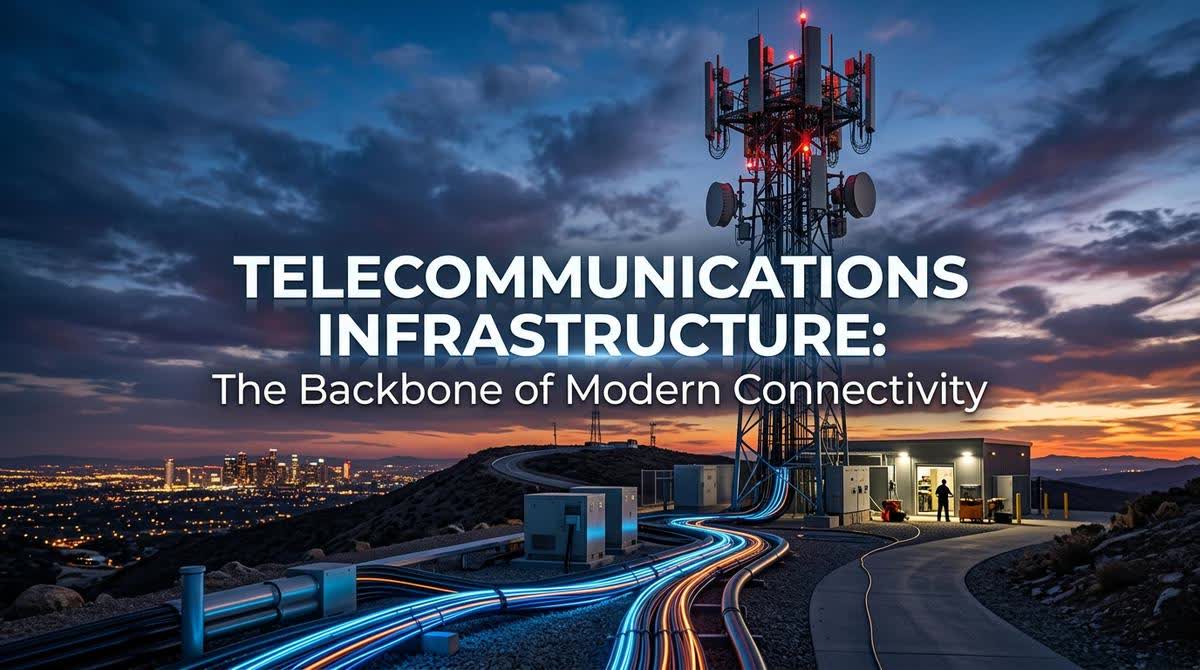
Telecommunications Infrastructure: The Backbone of Modern Connectivity
Telecommunications infrastructure is the backbone of our connected world. It enables voice communications, data services, and internet connectivity that power modern business and daily life. For telecom operators, building owners, and investors, understanding this infrastructure is essential.
The telecommunications industry has undergone significant transformation. Traditional voice services have evolved to include data, video, and internet services. Infrastructure requirements have evolved accordingly. Investment in quality infrastructure supports current services and future evolution.
The Strategic Importance of Telecommunications Infrastructure
Telecommunications infrastructure is critical to modern society and business.
Connectivity Enablement
Telecommunications infrastructure enables connectivity. Without it, businesses cannot operate effectively. Connectivity is essential for modern business. Infrastructure supports economic activity.
Competitive Positioning
Service providers compete on network quality and reliability. Infrastructure investment supports competitive positioning. Quality infrastructure attracts customers. Competitive positioning drives revenue.
Future-Proofing
Telecommunications services continue to evolve. Infrastructure must support future services. Investment in flexible infrastructure protects future revenue. Future-proofing is essential.
Revenue Generation
Telecommunications services generate significant revenue. Infrastructure supports revenue generation. Service quality affects revenue. Infrastructure investment supports revenue growth.
Regulatory Compliance
Telecommunications is regulated. Infrastructure must meet regulatory requirements. Compliance is essential for operation. Investment in compliance protects operations.
Critical Infrastructure Components
Telecommunications infrastructure consists of several integrated components.
Transmission Infrastructure
Transmission infrastructure carries signals between locations. Fiber optic cables are the primary transmission medium. Copper and wireless provide alternative transmission. Transmission must be reliable and high-capacity.
Fiber Optic Infrastructure
Fiber optic cables provide high-capacity transmission. They support voice, data, and video services. Fiber infrastructure must be installed professionally. Maintenance is essential.
Copper Infrastructure
Copper cabling continues to be used. It serves legacy services and local connections. Copper infrastructure must be maintained. Transition to fiber is ongoing.
Wireless Infrastructure
Wireless infrastructure supports mobile services. Towers and antennas provide coverage. Backhaul connects wireless to the network. Wireless infrastructure is essential.
Switching and Routing Infrastructure
Switching and routing infrastructure directs traffic. Switches connect local equipment. Routers connect networks. Infrastructure must be reliable and high-capacity.
Switching Equipment
Switches direct traffic within the network. They must be reliable and scalable. Capacity must meet demand. Switching infrastructure is essential.
Routing Equipment
Routers direct traffic between networks. They must handle diverse traffic types. Routing infrastructure must be reliable. Performance affects service quality.
Power Infrastructure
Telecommunications equipment requires reliable power. Power failures affect service availability. Backup power is essential. Power infrastructure must be reliable.
Uninterruptible Power Supply
UPS systems provide backup power during outages. They bridge between utility and backup. UPS must be sized for the load. Reliability is essential.
Generator Systems
Generators provide extended backup power. They must be sized for the facility. Fuel supply must be adequate. Generators must be maintained.
Physical Infrastructure
Physical infrastructure supports equipment and cabling. Equipment rooms and cabinets are required. Cabling pathways must be provided. Physical infrastructure supports operations.
Equipment Rooms
Equipment rooms house telecommunications equipment. They must be appropriately sized and conditioned. Access must be controlled. Equipment rooms support operations.
Cabling Infrastructure
Cabling infrastructure connects equipment. Structured cabling supports flexibility. Cable management is essential. Cabling infrastructure supports reliability.
Design Considerations
Telecommunications infrastructure design must address several critical factors.
Capacity Planning
Capacity must meet current and future demand. Growth must be anticipated. Scalability must be built in. Capacity planning is essential.
Reliability
Infrastructure must be reliable. Service outages affect customers. Redundancy should be considered. Reliability is essential for customer satisfaction.
Scalability
Infrastructure must support growth. Adding capacity should be straightforward. Scalability protects investment. Infrastructure should support evolution.
Security
Infrastructure must be secure. Physical security protects equipment. Cybersecurity protects operations. Security is essential.
Maintainability
Infrastructure must be maintainable. Access must be provided for maintenance. Maintenance should not affect operations. Maintainability supports reliability.
Implementation Process
Successful implementation requires careful planning and execution.
Requirements Definition
Define requirements based on service objectives. Understand capacity and growth needs. Identify reliability requirements. Document performance expectations.
Design Development
Develop infrastructure design to meet requirements. Consider all infrastructure components. Plan for scalability and evolution. Develop comprehensive documentation.
Construction and Installation
Construction must meet quality standards. Installation must be professional. Systems must be tested. Quality assurance is essential.
Testing and Commissioning
Testing verifies system operation. All systems must be tested. Performance must be verified. Documentation must be complete.
Operational Transition
Transition to operation must be managed carefully. Staff must be trained. Operations must be documented. Performance must be monitored.
Future Trends in Telecommunications Infrastructure
Telecommunications infrastructure continues to evolve.
5G Evolution
5G networks are being deployed. They provide higher capacity and lower latency. Infrastructure must support 5G. 5G evolution is ongoing.
Fiber Expansion
Fiber networks continue to expand. Fiber provides the capacity for future services. Fiber investment is essential. Fiber expansion will continue.
Edge Computing
Edge computing is changing network requirements. Computing is moving closer to users. Infrastructure must support edge computing. Edge computing is growing.
Virtualization
Network functions are being virtualized. Software replaces hardware functions. Virtualization improves flexibility. Virtualization is transforming infrastructure.
Sustainability
Sustainability is becoming a priority. Energy efficiency reduces costs and environmental impact. Sustainable infrastructure is increasingly important. Sustainability supports regulatory compliance.
The AllandMuchMore Perspective
At AllandMuchMore, we understand the critical importance of telecommunications infrastructure. Our approach reflects this understanding.
Strategic Understanding
We understand telecommunications requirements. We know the business case. Our approach is grounded in service objectives.
Design Excellence
We design infrastructure that meets requirements. Our designs are reliable and scalable. We consider future evolution. Our designs are practical and maintainable.
Quality Implementation
Our experienced teams deliver quality installation. We commission systems thoroughly. Our documentation is complete.
Ongoing Support
We provide training and ongoing support. We help you optimize operations. Our relationship extends beyond installation.
Conclusion
Telecommunications infrastructure is the backbone of modern connectivity. It supports voice, data, and internet services that power our world. Investment in quality infrastructure supports current services and future evolution.
Organizations that invest in quality telecommunications infrastructure gain competitive advantage. They provide reliable services and support growth. Their infrastructure supports service evolution.
At AllandMuchMore, we have the expertise to help you implement effective telecommunications infrastructure. Our comprehensive approach covers everything from strategic planning through operational support. When you work with us, you are investing in the backbone of connectivity.