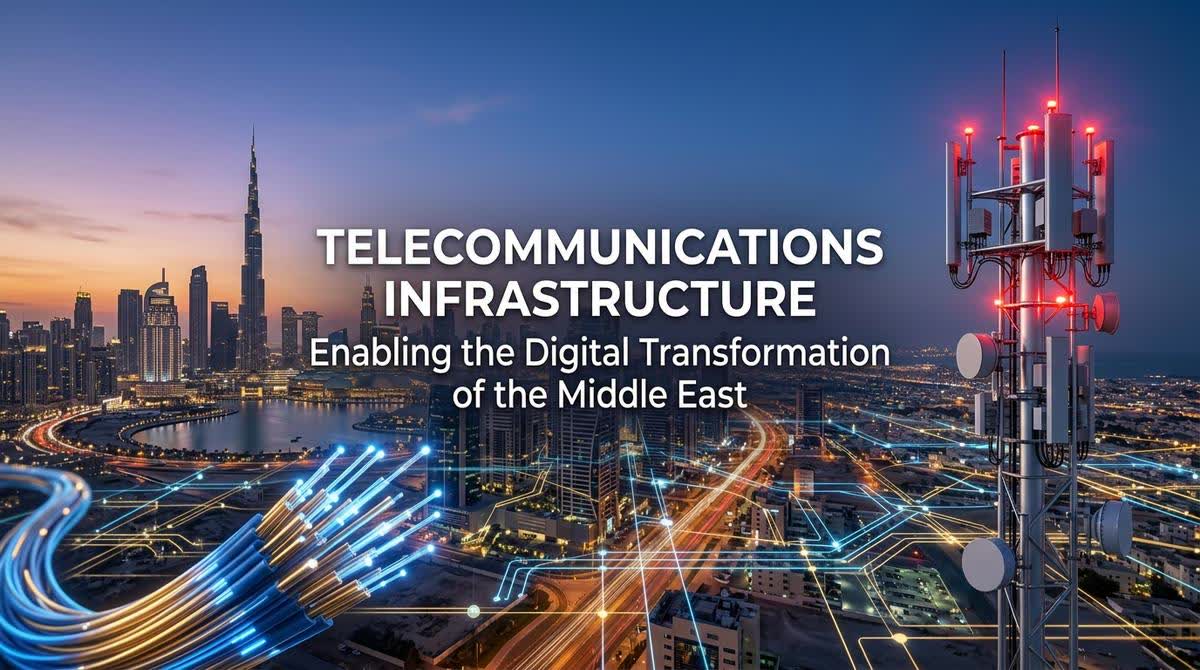
Telecommunications Infrastructure: Enabling the Digital Transformation of the Middle East
The digital transformation sweeping the Middle East is fundamentally reshaping how business is conducted, how services are delivered, and how people live and work. At the heart of this transformation is telecommunications infrastructure, the backbone of connectivity that enables everything from simple communications to sophisticated digital services.
For governments, businesses, and investors, understanding the strategic importance of telecommunications infrastructure is essential. The region is investing heavily in network capabilities, creating opportunities for those who participate in the sector and benefits for those who leverage connectivity effectively.
The Strategic Importance of Telecommunications Infrastructure
Telecommunications infrastructure is no longer merely a utility but a strategic asset that enables economic activity and quality of life.
Connectivity as a Foundation for Economic Activity
Modern economic activity depends on connectivity. Businesses require reliable communications and data services. E-commerce depends on network access. Digital services are delivered through telecommunications networks. Connectivity is a foundation for economic activity.
The Enabler of Digital Transformation
Digital transformation is impossible without robust telecommunications infrastructure. Cloud services require network access. Internet of Things depends on connectivity. Artificial intelligence requires data transmission. Telecommunications infrastructure enables digital transformation.
Support for Government Services
Government services are increasingly delivered digitally. Citizen engagement is online. Service delivery depends on connectivity. Telecommunications infrastructure supports government services. Government efficiency depends on infrastructure.
Enabler of Social Connectivity
Social connectivity increasingly depends on telecommunications. Families and communities connect across distances. Social services are delivered through digital channels. Telecommunication infrastructure supports social connectivity.
Competitive Differentiator
Telecommunications quality is a competitive differentiator for economies. Countries with better connectivity attract business and investment. Telecommunications infrastructure supports economic competitiveness.
The State of Telecommunications Infrastructure in the Middle East
The Middle East has made significant progress in developing telecommunications infrastructure.
5G Deployment
The region is at the forefront of 5G deployment. The technology provides higher speeds and lower latency. 5G supports new applications and services. 5G deployment is accelerating.
Fiber Infrastructure Expansion
Fiber optic networks are expanding across the region. Fiber provides the capacity for current and future services. Fiber investment is a priority for telecom operators. Fiber infrastructure is growing.
Data Center Development
Data centers are being developed across the region. The centers support cloud services and digital businesses. Data center investment supports digital transformation. Data centers are increasingly important.
Satellite Communications
Satellite communications serve remote areas and specialized applications. Satellite infrastructure supports connectivity where terrestrial networks are limited. Satellite communications are being modernized.
International Connectivity
The region is an international connectivity hub. Submarine cables connect the region to global networks. International connectivity supports trade and communication. Global connectivity is important.
Key Infrastructure Components and Capabilities
Telecommunications infrastructure consists of several integrated components.
Access Networks
Access networks connect users to the telecommunications system. Mobile networks provide wireless access. Fixed networks provide wired access. Access networks are the user interface.
Transport Networks
Transport networks carry traffic between locations. Fiber optic networks are the primary transport infrastructure. Microwave and satellite provide alternative transport. Transport networks are the backbone.
Core Networks
Core networks process traffic and connect to services. Switching and routing are core functions. Core networks are the intelligence layer. Core networks support service delivery.
Support Infrastructure
Support infrastructure includes power, cooling, and facilities. Reliable power is essential for network operation. Cooling protects equipment. Facilities support network equipment. Support infrastructure is essential.
Service Platforms
Service platforms deliver telecommunications services. Voice platforms support calling. Data platforms support internet access. Service platforms deliver value to users.
Investment Opportunities in Telecommunications Infrastructure
Telecommunications infrastructure creates significant investment opportunities.
Infrastructure Investment
Direct investment in telecommunications infrastructure offers attractive returns. Network assets generate revenue. Investment in fiber and 5G is growing. Infrastructure investment is a primary opportunity.
Technology Investment
Technology investment supports telecommunications infrastructure. Equipment and software are required. Technology investment supports network evolution. Technology opportunities are significant.
Service Investment
Investment in services delivered over telecommunications infrastructure. Content and applications create value. Service investment is growing. Services are a significant opportunity.
Managed Services
Managed services support telecommunications operations. Network management, support, and optimization are required. Managed services opportunities are growing.
Partnership Opportunities
Partnerships with telecommunications operators offer opportunities. Joint ventures and collaborations are common. Partnerships support market entry and growth.
Challenges and Considerations
Telecommunications infrastructure development faces significant challenges.
Regulatory Requirements
Telecommunications is highly regulated. Licensing and compliance requirements are extensive. Regulatory management is essential. Understanding the regulatory environment is critical.
Capital Intensity
Telecommunications infrastructure requires substantial capital investment. Funding is required for network development. Capital intensity creates barriers to entry. Access to capital is important.
Technology Evolution
Telecommunications technology evolves rapidly. Networks must be updated regularly. Obsolescence is a risk. Planning for evolution is essential.
Market Competition
The telecommunications market is competitive. Operators compete for customers. Competition pressures margins. Competitive positioning is important.
Security Concerns
Telecommunications networks are targets for cyber attacks. Security must be robust. Protection is essential. Security investment is required.
Future Trends in Telecommunications Infrastructure
Telecommunications infrastructure continues to evolve.
6G Development
6G technology is being developed. The technology will provide further improvements. 6G will support new applications. 6G development is underway.
Network Virtualization
Network functions are being virtualized. Software replaces hardware functions. Virtualization improves flexibility. Network evolution continues.
Edge Computing
Edge computing is being deployed. Computing is moving closer to users. Edge computing supports new services. Edge computing is growing.
AI Integration
Artificial intelligence is being integrated into networks. AI optimizes network operation. Predictive maintenance is enabled. AI integration is increasing.
Sustainability Focus
Sustainability is becoming a priority. Energy efficiency is important. Networks are becoming more sustainable. Sustainability is a focus of investment.
The AllandMuchMore Perspective
At AllandMuchMore, we understand the strategic importance of telecommunications infrastructure in the Middle East. Our approach reflects this understanding.
Strategic Understanding
We understand the telecommunications sector and its importance. Our approach is grounded in sector knowledge. We help clients achieve their objectives.
Comprehensive Capability
We provide comprehensive telecommunications infrastructure services. Our capabilities cover design, installation, and integration. We support network development.
Quality Delivery
We deliver quality projects that meet requirements. Our experienced teams follow best practices. We ensure network performance.
Partnership Approach
We work in partnership with our clients. We understand their objectives. We support their success.
In the End :
Telecommunications infrastructure is the backbone of the digital transformation sweeping the Middle East. The region is investing heavily in network capabilities, creating significant opportunities for businesses and investors. Understanding the strategic importance of telecommunications infrastructure is essential for success.
Governments, businesses, and investors who embrace telecommunications infrastructure development gain competitive advantage. They enable economic activity, support digital transformation, and create value. The investment in telecommunications infrastructure is an investment in the future.
At AllandMuchMore, we have the expertise to help you succeed in the telecommunications infrastructure sector. Our comprehensive approach covers everything from strategic planning through project delivery. When you work with us, you are investing in the future of connectivity.